Featured Snippet Answer
The best body lotion ingredients include niacinamide, ceramide NP, shea butter, mango seed butter, almond oil, glycerin, hyaluronic acid, and vitamin E. Used regularly, these hydrate skin, strengthen the skin barrier, lock in moisture, and improve texture on dry, rough, or dull patches.
Not every lotion works the same. Some feel nice for five minutes and disappear. Others actually do something. The difference always comes down to what's inside the bottle.
So what ingredients should you look for in a good body lotion? Each one's got a job. Butters lock moisture in. Ceramides rebuild the barrier. Niacinamide works on brightness and tone. Know what each one does, and picking a lotion stops being a guessing game.
This guide breaks down the ingredients that actually matter and why they keep skin soft, hydrated, and healthy, day after day.
Key Takeaways
- Ingredients matter more than the label: "Moisturizing" and "hydrating" sound good but don't mean much on their own. What's actually inside decides whether a lotion works or just sits there.
- Good body lotion ingredients do two jobs: They pull moisture into the skin, then lock it in. Miss either step, and dryness comes right back within hours.
- Skin barrier ingredients matter more than most people realize: Ceramide NP and shea butter don't just moisturize they rebuild what your skin's barrier naturally loses through the day.
- Moisturizing ingredients like glycerin and hyaluronic acid work fast, but they're not enough alone: Without something to seal them in, that hydration evaporates just as quickly as it arrived.
- Consistency beats quantity: A great formula used once a week won't do much. The same lotion, used daily, is where real change shows up.
- Knowing what ingredients to look for turns guesswork into a real decision: Once you know what each ingredient does, picking a body lotion stops being about scent or packaging and starts being about what your skin actually needs.
Why do Body Lotion Ingredients Matter?
Throughout the day your skin is exposed to environmental stressors such as the sun, pollution, air conditioning, harsh cleansers & the changing weather which naturally causes moisture loss. If your skin barrier isn’t properly hydrated, your skin can feel dry, rough, tight and uncomfortable.
A well formulated body lotion is more than just a surface moisturiser, it helps to restore lost moisture, support the skin's natural protective barrier and improve the overall look and feel of your skin.
The best ingredients for body lotions combine to:
- Provide sustained hydration
- Enhance skin protection
- Minimize the loss of moisture
- Smooth out rough skin
- Improve the texture of your skin
- Promote a skin that looks healthy
It's crucial to know what ingredients are genuinely good for your skin rather than selecting a body lotion just on the basis of fragrance or packaging.
What Ingredients Should You Look For in a Good Body Lotion?
A good body lotion needs three things working together: a humectant to pull moisture in, an emollient to smooth skin, and a barrier-repair ingredient to lock everything in place. Miss one of these, and the lotion falls short somewhere even if it smells great and feels nice going on.
Most labels don't explain this. "Moisturizing" and "hydrating" sound reassuring, but they don't tell you what's actually doing the work. That's in the ingredient list, not the front of the bottle. Once you know what each type of ingredient does, you can easily pick a lotion suitable to your skin type.
Moisturizing Ingredients (Humectants)
Moisturizing ingredients like glycerin, sodium hyaluronate, and hyaluronic acid work by and holding it there. They act fast and the skin feels plumper almost right after applying.
The catch: humectants alone don't last. Without something to seal that moisture in, it evaporates just as quickly as it arrived. That's why glycerin and hyaluronic acid rarely work well on their own; they need backup from richer ingredients to actually hold up through the day.
Skin Barrier Ingredients
Skin barrier ingredients are the ones doing the slower, less glamorous work: shea butter, squalane, and especially ceramide NP. A lotion that only hydrates leaves the actual barrier, the layer protecting skin from moisture loss in the first place untouched. Repair that barrier, and skin holds onto moisture on its own, long after you've stopped applying anything.
Radiance & Comfort Ingredients
Niacinamide aren't essential the way humectants or barrier ingredients are, but they're worth watching for. Niacinamide helps skin look smoother and more even over time not a glow filter, just skin that looks a little more awake.Neither ingredient replaces hydration or barrier repair. Think of them as the finishing touch, the part that shows up once the basics are already covered.
What Are the Benefits of the Right Body Lotion Ingredients?
The body lotion benefits that actually matter come down to six things: lasting hydration, barrier support, less moisture loss, smoother texture, softer rough patches, and a healthier-looking glow. Each one traces back to a specific ingredient, not just a claim on the label.
Here's how it breaks down.
Lasting hydration: This comes from humectants like glycerin and hyaluronic acid. They pull water into the skin fast, which is why skin feels plumper almost right after applying.
Barrier support: This is ceramide NP's job. It's a lipid your skin already makes on its own, and topping it up means skin holds onto moisture instead of losing it as fast.
Less moisture loss: Shea butter and squalane sit on top of skin and slow down water escaping through the day. Without them, even good hydration disappears within a few hours.
Smoother texture: Rough patches on elbows, knees, and heels soften with regular use of shea butter and ceramide NP together. Not overnight this one takes consistency.
Softer, more comfortable skin: When barrier and hydration ingredients work together, that tight, stretched feeling after a shower starts to fade. Skin stops fighting dryness, so it shows.
A healthier-looking glow: Niacinamide handles this part. Skin looks a bit more even and awake, not flat or dull the result of steady antioxidant support, not a filter effect.
None of these benefits show up from one application. They build with consistency the same way the ingredients themselves need each other to actually work. A humectant without a barrier ingredient fades fast. A barrier ingredient without hydration has nothing to lock in. Get the combination right, and the benefits above are what shows up on skin, day after day.
Ingredients to Avoid in a Body Lotion
Some ingredients do more harm than good, or just don't do much at all. Three to watch for: heavy fragrance-only formulas, alcohol-heavy bases, and mineral oil used as the only occlusive with nothing else backing it up.
Heavy fragrance-only formulas. If fragrance is one of the first few ingredients listed and there's no real humectant or barrier ingredient behind it, that lotion is mostly scent, not substance. It smells nice going on, then does very little after that. Worse, heavy fragrance can irritate sensitive skin over time the opposite of what a body lotion is supposed to do.
Alcohol-heavy bases. Not all alcohols are bad some, like cetyl alcohol, actually help texture. But drying alcohols (often listed as denatured alcohol or SD alcohol) strip moisture rather than add it. A lotion leaning on these might feel light and fast-absorbing at first, but it can leave skin drier than before you applied it.
Mineral oil with nothing else. Mineral oil isn't automatically bad it's an occlusive, and occlusives have a real job. The problem is when it's the only thing doing that job, with no humectant pulling moisture in first. That's like sealing a door with nothing behind it. Skin ends up coated, not actually hydrated.
The pattern across all three: they either skip a step in the hydration process, or they're doing the opposite of what a body lotion should. A good formula needs a humectant, an emollient, and a barrier-repair ingredient working together anything built around just one of these, or none at all, isn't going to hold up.
How to Use Body Lotion Ingredients for Best Results
Even the best formula won't do much if it's used the wrong way. Timing, frequency, and how much you apply all affect how well those ingredients actually work.
When Should You Apply Body Lotion?
Right after a shower, my skin's still a little damp. Warm water opens things up, so skin absorbs product better in those first few minutes. Pat dry instead of rubbing, then apply while skin still has a bit of moisture on it that's the window where humectants like glycerin and hyaluronic acid have actual water to pull in and lock down.
Wait too long after drying off, and you're starting from drier skin. The lotion has to work harder for a smaller result.
How Often Should You Apply It?
Daily, at minimum. Twice a day morning and night if skin runs dry or the weather's working against you. Skin loses moisture continuously throughout the day, so skipping even a couple of days lets dryness creep back in, and barrier-repair ingredients like ceramide NP need consistent use to actually rebuild anything.
One good application won't undo weeks of dryness. But a daily one, over a few weeks, is where the real difference shows up skin holding onto moisture on its own, not just right after applying.
How much to use:
Enough for full, even coverage. No exact number elbows, knees, and heels usually need a bit more than arms or legs since they dry out faster. If it feels greasy, that's too much. If it soaks in instantly with nothing left, use a little more next time.
How Alora Radiance Body Lotion Uses These Ingredients

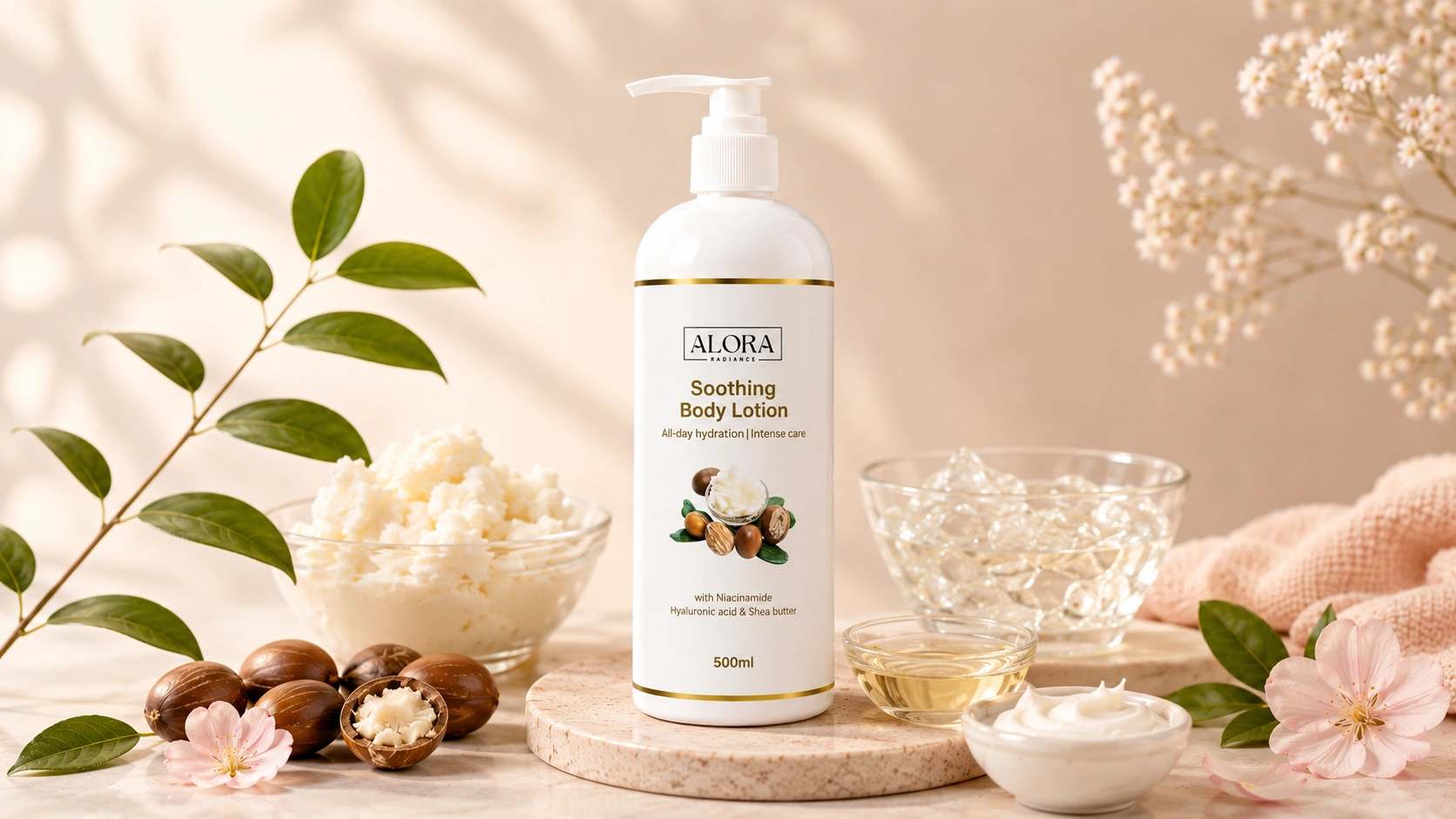
Alora Radiance Body Lotion is built around the exact framework covered above hydration, barrier support, and radiance, working together instead of one ingredient trying to carry the whole formula.
Hyaluronic acid handles the hydration side, pulling moisture into skin fast and keeping it there longer than a typical humectant on its own. Shea butter does the slower, less flashy work softening rough patches and helping skin hold onto that moisture instead of losing it again by evening. And niacinamide rounds it out, working on tone and texture so skin looks more even and awake over time, not just hydrated.
Three ingredients, three jobs, no overlap and no filler. That's really the point of a formula built around what each ingredient actually does, not just what sounds good on a label.
That's the difference between a lotion that smells nice and one that's formulated to work. Alora Radiance was built around the second option.
Frequently Asked Questions
1. What is the most important ingredient in lotion?
Most important ingredients in lotion are humectant to pull moisture in and a barrier-repair ingredient to lock it there. If you had to pick the one doing the most long-term work, it's ceramide NP, since it's a lipid your skin already makes naturally, and it rebuilds the barrier itself rather than just adding surface moisture.
2. What is a good 3-ingredient body lotion?
A solid minimal formula combines glycerin for hydration, shea butter for smoothing, and ceramide NP for barrier repair. That covers all three jobs a body lotion needs to do: pull moisture in, soften skin, and keep that moisture from escaping again.
3. What does niacinamide do in body lotion?
Niacinamide helps skin look smoother and more even over time. It's not an instant brightener it works gradually, supporting tone and texture alongside whatever hydrating ingredients are in the formula.
4. Why do body lotion ingredients matter?
Because the label doesn't tell you what's actually working. "Moisturizing" and "hydrating" sound reassuring, but the real difference between a lotion that works and one that just sits there comes down entirely to the ingredient list.
5. When is the best time to apply body lotion?
Right after a shower is the best time to apply body lotion because the skin is still a little damp. Skin absorbs product better in those first few minutes, giving hydrating ingredients like glycerin actual moisture to lock in.
6. How often should you apply body lotion for the best results?
Daily at minimum, twice a day if skin runs dry. Skin loses moisture continuously throughout the day, so consistency matters more than how much is applied in one sitting.
7. What ingredients should you look for in a body lotion?
Look for three types working together: a humectant like glycerin or hyaluronic acid to pull moisture into the skin, an emollient like shea butter to smooth skin, and a barrier-repair ingredient like ceramide NP to lock everything in place.
8. What are the best ingredients in a body lotion for smooth skin?
Shea butter and ceramide NP do the most for smoothing rough, textured skin. Shea butter softens on contact; ceramide NP repairs the barrier underneath so roughness doesn't return the next day.
9. What is the best body lotion for glowing skin?
One with niacinamide and green tea extract, paired with strong hydration. Both ingredients even out skin tone over time, but that effect only shows up once skin is properly hydrated first.
10. Best body lotion for dry skin?
One that combines a humectant like sodium hyaluronate with barrier-repair ingredients like shea butter and ceramide NP. That pairing hydrates and repairs at the same time more effectively for dry skin than a lotion that only hydrates on the surface.