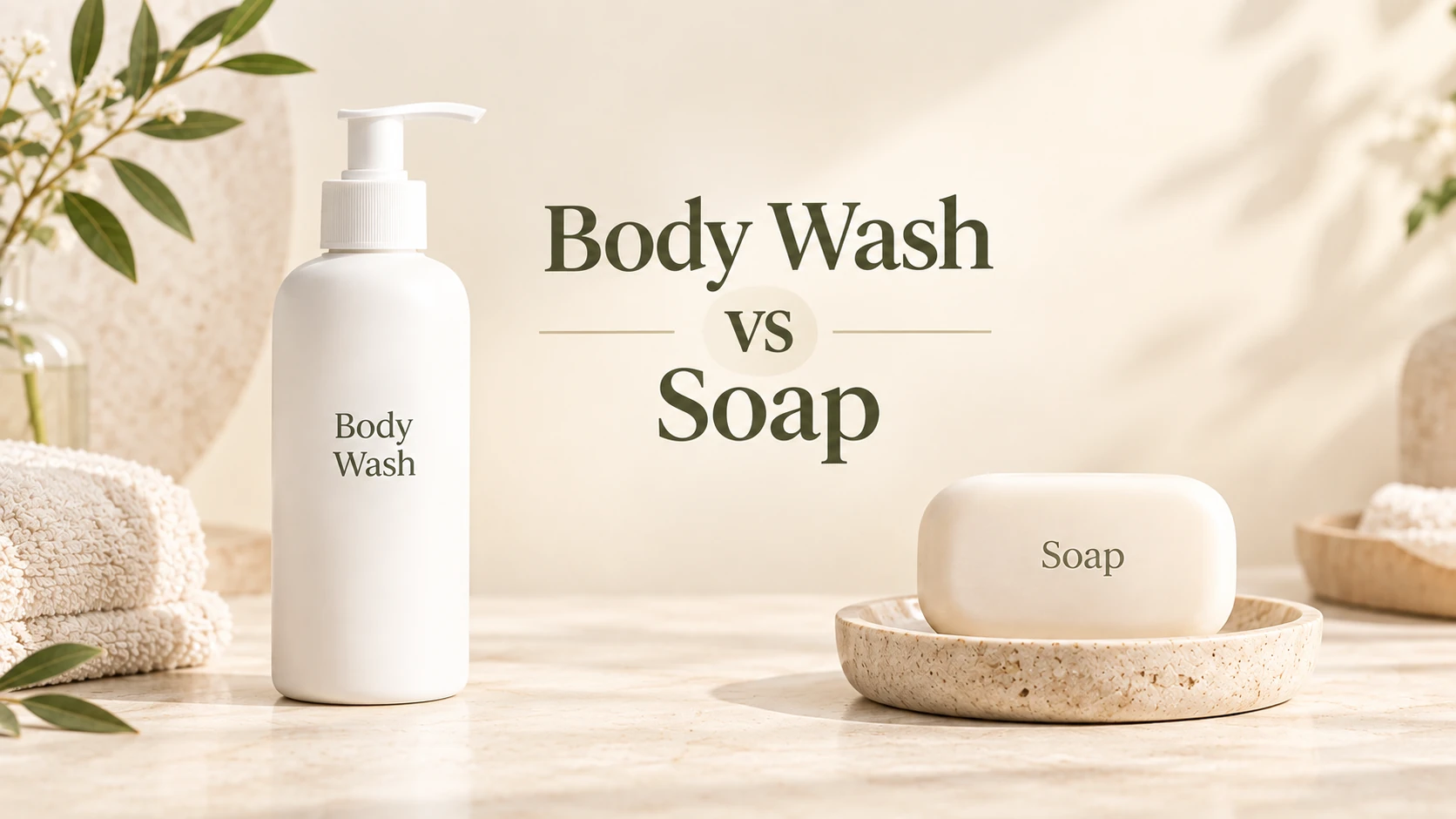
Body wash or soap? Feels like a settled debate — most people just use whatever's been sitting in their shower since childhood, no real thought behind it.
But that's exactly the problem. This isn't really about which one's "cleaner." Both clean skin fine. The real question is which one suits your skin type without stripping it in the process — and that answer isn't the same for everyone.
This blog breaks down how each one actually affects skin, what's genuinely different between them beyond marketing, and how to figure out which is the better call for your skin specifically, not just the one you've defaulted to for years.
What's the Real Difference Between Body Wash and Soap?
Soap vs body wash isn't just a texture difference — it starts with how each one is actually made.
How Bar Soap Is Made — pH Level and Saponification
Traditional bar soap comes from a chemical process called saponification, where fats or oils react with an alkali to form soap. This process naturally results in:
- A higher pH, typically 9–10, compared to skin's natural pH of around 5.5
- A cleansing action that's effective but can be harsh on the skin barrier
- Less flexibility to include added moisturizing ingredients without affecting the bar's structure
How Body Wash Is Formulated Differently
Body wash isn't made through saponification at all. It's built from synthetic surfactants designed specifically for skin, which allows for:
- A pH closer to skin's natural level, usually formulated to be gentler
- Room to add moisturizers, oils, and actives without compromising the formula
- More consistent texture and performance across different water conditions
Why This Difference Matters More Than People Assume
This isn't just a manufacturing detail — it directly affects how skin feels after washing. A higher pH product disrupts the skin's natural acid mantle more easily, which is often the actual reason skin feels tight or dry after showering, not just "dry skin" in general.
How Soap Affects Your Skin
Soap for skin isn't automatically bad but it does behave differently than most people realize, and that difference shows up over time, not immediately.
Why Traditional Soap Tends to Be More Alkaline
Bar soap's saponification process naturally produces a pH around 9–10. Skin's natural pH sits closer to 5.5, slightly acidic. That gap isn't just a number, it's the difference between a product that works with your skin's natural chemistry and one that fights against it every time you use it.
How That Affects the Skin's Natural Barrier Over Time
The skin barrier relies on staying slightly acidic to function properly keeping moisture in, keeping irritants and bacteria out. Regular use of a high-pH soap can:
- Gradually weaken that acid mantle
- Leave skin more prone to dryness and tightness
- Make skin more reactive to products it previously tolerated fine
None of this happens after one wash. It's a slow shift that builds with repeated daily use.
Who Soap Still Works Fine For (And Who Should Be Cautious)
Soap isn't universally bad for naturally oily, resilient skin, occasional use is usually fine. The bigger concern is for dry, sensitive, or already barrier-compromised skin, where that repeated pH mismatch adds up faster and shows up as irritation, tightness, or flaking sooner than expected.
Body Wash Benefits Worth Knowing
Once you know how soap behaves on skin, the body wash benefits start making more sense — they're solving for the exact gap soap tends to leave.
Gentler, pH-Balanced Formulas for Daily Use
Body wash is formulated specifically to sit closer to skin's natural pH, rather than being a byproduct of a chemical reaction built for cleansing alone. That means daily use is less likely to disrupt the skin barrier the way repeated high-pH soap use can.
Room for Added Ingredients
Because body wash isn't limited by the structural requirements of a solid bar, formulas can include a lot more:
- Moisturizing agents like glycerin or hyaluronic acid
- Active ingredients such as niacinamide or exfoliating acids
- Fragrance-free or hypoallergenic options for reactive skin
Soap's rigid format makes this kind of formulation flexibility much harder to achieve without compromising the bar itself.
Why Body Wash Tends to Suit Sensitive or Dry Skin Better
For skin that's already prone to dryness, tightness, or reactivity, the combination of a gentler pH and added hydrating ingredients makes a real difference. It's not that body wash is universally "better" it's that the formulation gives it more built-in ways to support skin instead of just cleaning it and leaving it to fend for itself afterward.
Does Body Wash Actually Clean as Well as Soap?
This is the question that stops a lot of people from switching — does gentler actually mean less effective?
Comparing Cleansing Effectiveness, Not Just Skin Feel
Soap's higher pH and stronger stripping action can feel more "thorough," but that feeling isn't the same as actual cleansing power. Body wash surfactants are designed specifically to lift dirt, oil, and sweat just as effectively, without relying on disrupting the skin barrier to do it.
Why "Less Stripping" Doesn't Mean "Less Clean"
The tight, squeaky feeling after soap is often mistaken for "extra clean," when it's really just a stripped barrier. Body wash can remove the same buildup without that harsh after-effect — the skin just doesn't feel raw doing it.
When Soap's Stronger Cleansing Action Is Actually Useful
There are cases where soap's more aggressive cleansing genuinely helps — heavy manual labor, excessive sweat, or situations needing a stronger degreasing action. For everyday use on regular skin, though, that extra strength isn't solving a problem most people actually have.
How to Choose the Best Body Wash for Your Skin Type
Not every body wash suits every skin type, so "best" really depends on what your skin needs most.
Dry or Sensitive Skin — What to Look For
Look for formulas built around hydration and calm, not foaming power:
- Glycerin or hyaluronic acid for moisture retention
- Fragrance-free or minimal-fragrance formulas to reduce irritation risk
- Creamy, low-lather textures — heavy foaming often means stronger surfactants
Oily or Acne-Prone Skin — What Actually Helps
Oilier skin doesn't need to be stripped, just balanced:
- Niacinamide to help regulate oil without over-drying
- Light, gel-based formulas that rinse clean without residue
- Non-comedogenic labeling to avoid clogged pores on the body
Ingredients That Make a Body Wash Genuinely Skin-Friendly (vs. Marketing Claims)
A lot of "skin-friendly body wash" labeling is just branding. What actually matters is what's on the ingredient list pH-balanced formulation, real moisturizing agents, and an absence of harsh sulfates or heavy fragrance. If the label leans on buzzwords more than actual ingredients, it's worth checking the list itself before trusting the front of the bottle.
When Soap Might Still Be the Better Choice
Body wash isn't the automatic winner in every situation. Soap still makes sense in a few specific cases.
Handwashing and High-Frequency Use Cases
Hands get washed far more often than the rest of the body, sometimes 15-20 times a day. For high-frequency use, soap's simplicity and lower cost per wash make it a practical default, especially since hand skin tends to be more resilient to repeated exposure than face or body skin.
Budget and Simplicity as Valid Reasons to Stick With Soap
Not every choice has to be optimized for skin benefits. Soap is cheaper, lasts longer per bar, and requires zero decision-making about ingredients or formulas, a legitimate reason for a lot of households to stick with it.
When Soap's Stronger Cleansing Might Actually Help
Frequently Asked Questions
Is body wash better than soap for skin?
For most skin types, yes body wash is typically pH-balanced closer to skin's natural level, while soap tends to be more alkaline and can strip the skin barrier over time.
Does soap dry out skin more than body wash?
Often, yes. Traditional bar soap has a higher pH (around 9–10) compared to skin's natural pH of about 5.5, which can weaken the skin barrier and lead to dryness with regular use.
What's the best body wash for sensitive skin?
Look for fragrance-free, pH-balanced formulas with hydrating ingredients like glycerin or hyaluronic acid, and avoid heavy foaming formulas that often mean stronger, more stripping surfactants.
Can body wash cause breakouts?
It can, if the formula contains pore-clogging ingredients or heavy oils not suited to your skin type. Choosing a non-comedogenic, gel-based formula generally lowers that risk.
Is bar soap bad for your skin?
Not inherently, but its higher pH can disrupt the skin's natural barrier with frequent use, especially on dry, sensitive, or already compromised skin.
Which is more hygienic, soap or body wash?
Both clean effectively when used properly. Body wash is often considered slightly more hygienic for shared use since it's dispensed rather than touched directly, unlike a bar that multiple people handle.
Does body wash clean as well as soap?
Yes. Body wash surfactants are designed to lift dirt and oil just as effectively as soap, without relying on the same barrier-disrupting alkalinity to do it.
Should I use soap or body wash for oily skin?
Body wash formulated with niacinamide or lightweight, non-comedogenic ingredients typically works better for oily skin than soap, which can sometimes over-strip and trigger rebound oil production.
Is soap cheaper than body wash?
Generally, yes. Bar soap tends to cost less per wash and lasts longer, which is a valid reason some people stick with it despite body wash's skin-focused advantages.
Can I use soap on my face if I use body wash on my body?
It's not recommended. Facial skin is typically more sensitive and reactive than body skin, so a high-pH soap is more likely to cause irritation there than on the rest of the body