Is your face tight by lunchtime, even though you moisturised that morning? Maybe the skin around your nose looks red, and the sunscreen you've always used has started to sting. This happens to a lot of people, and the usual reaction is to buy yet another cream.
But most of the time, the cream isn't the problem. Your skin barrier is. Once it's worn down, your skin can't hold water in or keep irritation out. That's where ceramides for skin barrier repair come in.
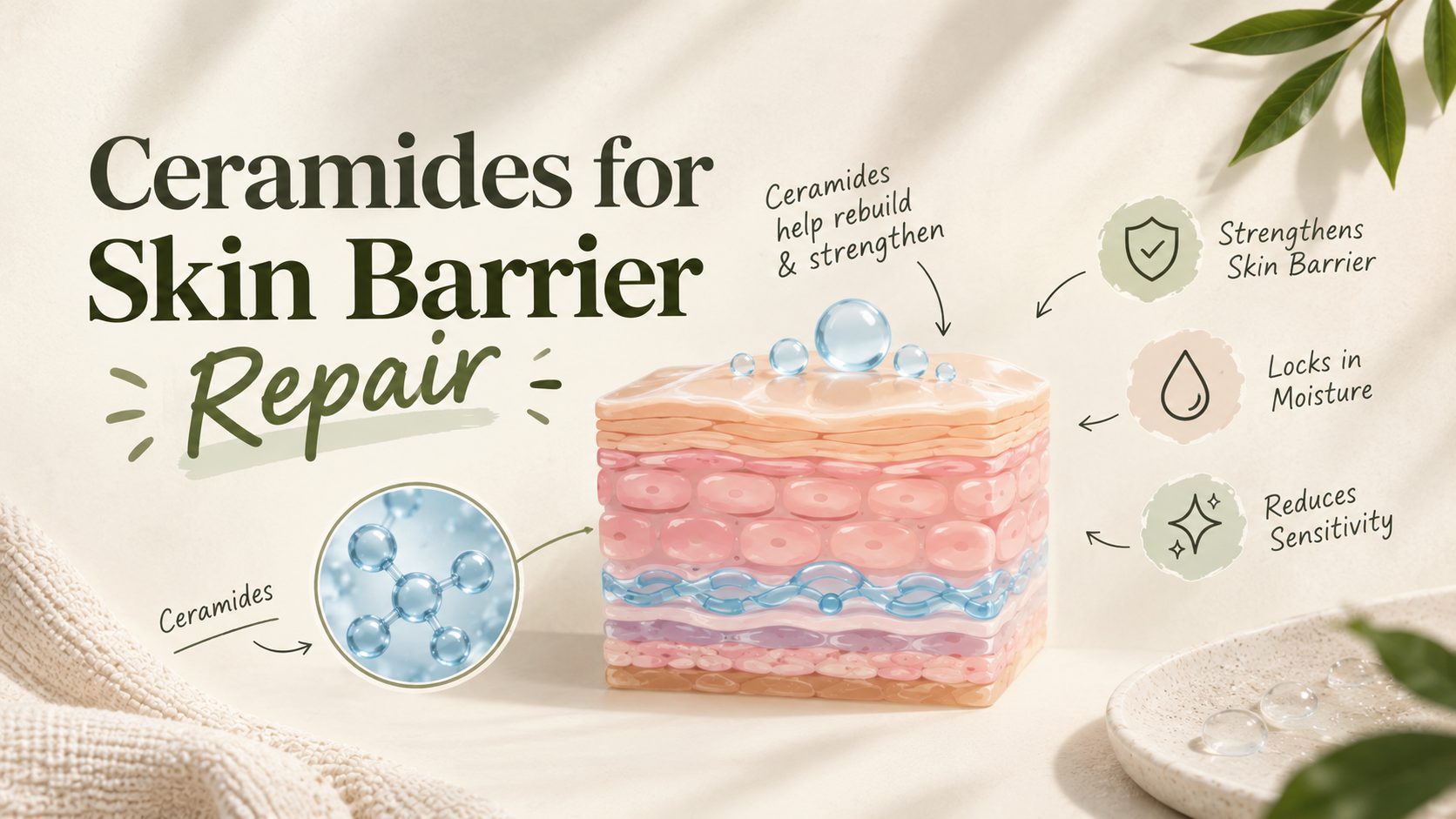
Ceramides are fats your skin already makes. They sit between your skin cells like mortar between bricks, holding everything in place. When you run low, your skin gets dry, touchy and sore.
In this guide, I'll explain what ceramides do, how to tell if your barrier is damaged, and how to pick a moisturiser that helps.
What Are Ceramides and Why Does Your Skin Need Them?
Ceramides are a type of fat that your skin makes by itself. They fill the tiny gaps between your skin cells, which keeps the surface smooth and soft.
When you have enough of them, your skin holds water well and rarely acts up. That's the biggest of the benefits of ceramides for skin. A change in weather, a new product or a rough week bothers it much less.
Ceramides in the Top Layer of Your Skin
The outer layer of your skin, called the stratum corneum, is built a bit like a brick wall:
- Skin cells are the bricks.
- Ceramides are the cement between them.
When the cement is strong, water stays in and irritants stay out. When it wears away, you end up with a damaged skin barrier. That's the tight, dry, red, stingy feeling that makes your skin so unhappy.
Types of Ceramides
Look at the back of a moisturiser and you'll spot names like these:
- Ceramide NP: helps skin hold on to water
- Ceramide AP: keeps the surface smooth
- Ceramide EOP: helps the skin layers stay tightly packed
You don't have to remember them. What matters is that a good ceramide moisturiser usually has more than one type, since your skin uses all of them.
Why Ceramide Levels Drop
Your skin doesn't always make enough ceramides. A few common reasons:
- Age: production slows down over the years
- Dry air: low humidity pulls water out of the skin
- Strong face wash: that squeaky-clean feeling means the natural oils are gone too
- Over-exfoliating: scrubs and acids wear the barrier thin
Picture this. You wash your face twice a day with a foaming cleanser, and you use an exfoliating toner every night. After a few weeks your face feels tight, and your usual moisturiser starts to sting.
The fix is simple. Swap to a mild cleanser, leave out the toner for two weeks, and put on the best ceramide cream you can find, morning and night. This is skin barrier repair at its most basic, and most people feel less tightness in about two weeks.
How Ceramides Repair the Skin Barrier
Imagine a brick wall with some of the mortar missing. It still stands, but it's weak, and the wind gets through. Ceramides fill in the missing mortar.
Rebuilding the Lipid Barrier
The mortar in your skin is made of fats called lipids. When your barrier is damaged, some of those fats have gone missing.
A ceramide moisturiser puts them back. The ceramides settle in between your skin cells and help everything hold together again. That's all skin barrier repair really is: giving your skin back what it lost so it can heal.
Locking In Hydration and Reducing TEWL
Back to the water that was leaking out. Once those gaps are filled in, much less of it gets away.
Once the gaps are filled, less water escapes from your skin. That's one of the biggest benefits of ceramides for skin:
- Skin stays hydrated for longer
- Tightness and flaking ease up
- Redness and stinging calm down
- Your skin copes better with weather and products
The Ceramide, Cholesterol and Fatty Acid Trio
Ceramides don't work alone. Your skin's natural barrier is made of three fats working as a team:
- Ceramides: the main cement
- Cholesterol: keeps the cement flexible
- Fatty acids: help it set properly
Dermatologists often recommend creams with all three, and it makes sense. Ceramides do most of the work, but cholesterol and fatty acids help them hold. So when you're standing in the pharmacy, flip the jar over and read the back. Ceramides, cholesterol, fatty acids. If all three are there, that's your best ceramide cream shortlist.
Picture a normal two weeks. Your face is tight and a bit sore, and you're pretty sure you've got a damaged skin barrier. You swap your lotion for a plain cream with no fragrance. You put it on after washing, morning and night, while your face is still damp. Usually the stinging settles in a few days. By week two, the tight feeling is mostly gone. No big transformation, just calmer skin.
Why Your Moisturiser Needs Ceramides
Ever put on moisturiser and feel great for an hour, then tight again by afternoon? A lot of creams sit on the surface and don't fix what's underneath. That's the gap ceramides fill.
Humectants, Emollients, Occlusives and Ceramides: What's the Difference?
Most moisturisers are a mix of a few ingredient types. Each does something different:
The first three look after how your skin feels today. Ceramides work on the barrier underneath. That's why a good ceramide moisturiser usually includes a bit of everything.
Who Needs Ceramides Most
Almost anyone can use them, but you'll likely notice the biggest difference if you have:
- Dry or sensitive skin
- Eczema-prone skin (check with your dermatologist as well)
- Mature skin, because it makes fewer ceramides on its own
- A routine with retinol or exfoliating acids that has left you with a damaged skin barrier
Can Oily or Acne-Prone Skin Use Ceramides?
Yes, and this surprises a lot of people. Having oily skin doesn't mean your barrier is strong. You can be shiny and still have a barrier that's worn down. When that happens, your skin gets irritated more easily, and breakouts can get worse.
That's one of the benefits of ceramides for skin that gets overlooked. They aren't only for dry, flaky faces.
Just choose a light texture:
- Gel-creams or lotions, not thick balms
- Anything labelled oil-free or non-comedogenic
Let's say you're on an acne treatment. Your face feels tight, but it's also shiny, which seems like it shouldn't be possible. It is, though. It usually means your barrier is worn out. A light ceramide gel-cream on top can help with skin barrier repair, and it won't make you break out. When your skin is oily, the best ceramide cream is usually the one you forget you're wearing.
How to Choose the Best Ceramide Moisturiser
Pharmacy shelves are packed with creams that have "ceramide" in big letters on the front. Some really are good. Others have hardly any in them. Luckily, a few quick checks will tell you which is which.
Reading the Ingredient List
Ignore the front of the box and flip it over. This is where the truth is. Look for:
- Ceramides: ceramide NP, ceramide AP or ceramide EOP
- Cholesterol
- Fatty acids: stearic acid or linoleic acid
Ingredients are listed from the most to the least. So if you spot a ceramide in the top half of the list, that's a good sign. If it's the very last thing on the label, there's probably only a sprinkle of it in the jar.
The best pick is usually a cream that has all three: ceramides, cholesterol and fatty acids. That's the combo that helps most when your barrier needs rebuilding.
Matching Texture to Skin Type
The right texture depends on your skin, and on the weather too:
- Oily or acne-prone: a light gel-cream or lotion
- Normal or combination: a lotion or a light cream
- Dry or sensitive: a rich cream
- Very dry, cracked or winter skin: a thick cream or balm
Many people switch textures throughout the year, and that's completely fine.
What to Avoid
Even a good ceramide moisturiser can let you down if it comes with irritants. Be careful with:
- Strong fragrance or essential oils
- Drying alcohols such as alcohol denat. or SD alcohol
- Unnecessary extras like menthol or harsh botanical extracts
This matters most if you already have a damaged skin barrier, because it reacts more easily to everything you put on it.
FREQUENTLY ASKED QUESTIONS
Can I use a ceramide moisturiser every day?
Yes, you can. Most people use it morning and night, and it's gentle enough for that. The best results usually come from using it regularly, not now and then. That's when you really notice the benefits of ceramides for skin.
Ceramide serum or cream: which is better?
If you can only pick one, go for the cream. It stays on your skin longer and keeps the moisture in. A serum is thinner and lighter, so it's more of a bonus than a must-have. Plenty of people skip it and do just fine.
Are ceramides safe for sensitive or acne-prone skin?
Most of the time, yes. Look for a cream with no fragrance that says non-comedogenic on the label. If your skin reacts to everything, try a small dab on your jawline or behind your ear first. Wait a day. If nothing happens, you're good to go.
How do I know if my skin barrier is damaged?
Your face will let you know. It feels tight, it stings, it goes red, or it starts flaking. Here's an easy check: if the moisturiser you've used for years suddenly burns after you wash your face, that's usually a damaged skin barrier.
How long does skin barrier repair take?
You might feel better in a few days, with less tightness and less stinging. But proper skin barrier repair takes longer, about four to six weeks. Stick with it, even when your skin starts to feel fine.
Can I use ceramides with retinol or acids?
Yes, and I'd say it's a smart move. Retinol and acids can leave your skin dry and peeling, and a ceramide moisturiser helps soften that.
Do oily skin types need ceramides?
Yes, they do. Oily doesn't mean protected. Your barrier can be weak even when your face is shiny. Just pick something light, like a gel-cream or a thin lotion.
What is the best ceramide cream?
Honestly, there isn't one. It depends on your skin. Turn the jar around and look for ceramides, cholesterol and fatty acids. Skip anything with added fragrance. Then choose a texture you'll actually enjoy putting on.
Can I use ceramides on my body?
You can. Ceramide body lotions work well on dry, rough or itchy skin. They work best right after a bath, while your skin is still a little damp.
Should I apply it before or after sunscreen?
Before. Moisturiser goes on first. Give it a minute to settle, then put on sunscreen as your last step in the morning.