Hyaluronic acid hydrates skin by drawing water into its surface layers, but how well it works depends heavily on whether your skin is dry or dehydrated - two very different things. Dehydrated skin simply lacks water, which makes it an ideal match for hyaluronic acid, since the ingredient does exactly what the skin needs: pulling moisture in and helping restore a plump, hydrated look. Dry skin, on the other hand, lacks oil, not just water, meaning hyaluronic acid alone can only go so far. Without enough lipids to lock that hydration in, skin can still feel tight or rough even after consistent use. In short, hyaluronic acid genuinely hydrates - but it works best as part of a routine that also addresses your skin's specific needs, rather than as a stand-alone fix for every type of dryness.
What Is Hyaluronic Acid?
Hyaluronic acid is a naturally occurring molecule already found in your skin, where it helps retain moisture and keep tissue plump. In skincare products, it's used as a humectant, an ingredient that attracts and holds onto water, pulling it into the surface layers of skin.
What makes it so popular is its impressive capacity to hold water. A single molecule of hyaluronic acid can hold significantly more than its own weight in water, which is why it's become a staple in serums, moisturizers, and even lip products.
A few quick facts:
- It occurs naturally in skin, joints, and connective tissue
- It's considered suitable for nearly all skin types, including sensitive skin
- It's typically used alongside other ingredients rather than as a standalone treatment
Unlike exfoliating acids (despite sharing the word "acid" in its name), hyaluronic acid doesn't resurface skin - its sole job is hydration.
Does Hyaluronic Acid Hydrate Skin?
This is actually backed by real dermatological research, not just skincare myth. The concern around hyaluronic acid "backfiring" in dry climates has been documented enough that most dermatologists now recommend always sealing it with a moisturizer, rather than using it alone. So while the headlines around this ingredient can sound dramatic, the fix is refreshingly simple: it's not that hyaluronic acid doesn't work, it's that it needs the right conditions and a follow-up step to actually deliver on its promise.
What actually determines results:
- Humidity levels in your environment
- Whether you apply it to damp or dry skin
- Whether you follow it with a moisturizer to lock hydration in
In short, hyaluronic acid absolutely can hydrate skin - but only when used correctly, and climate plays a bigger role than most people realize.
Hyaluronic Acid for Dry Skin vs. Dehydrated Skin
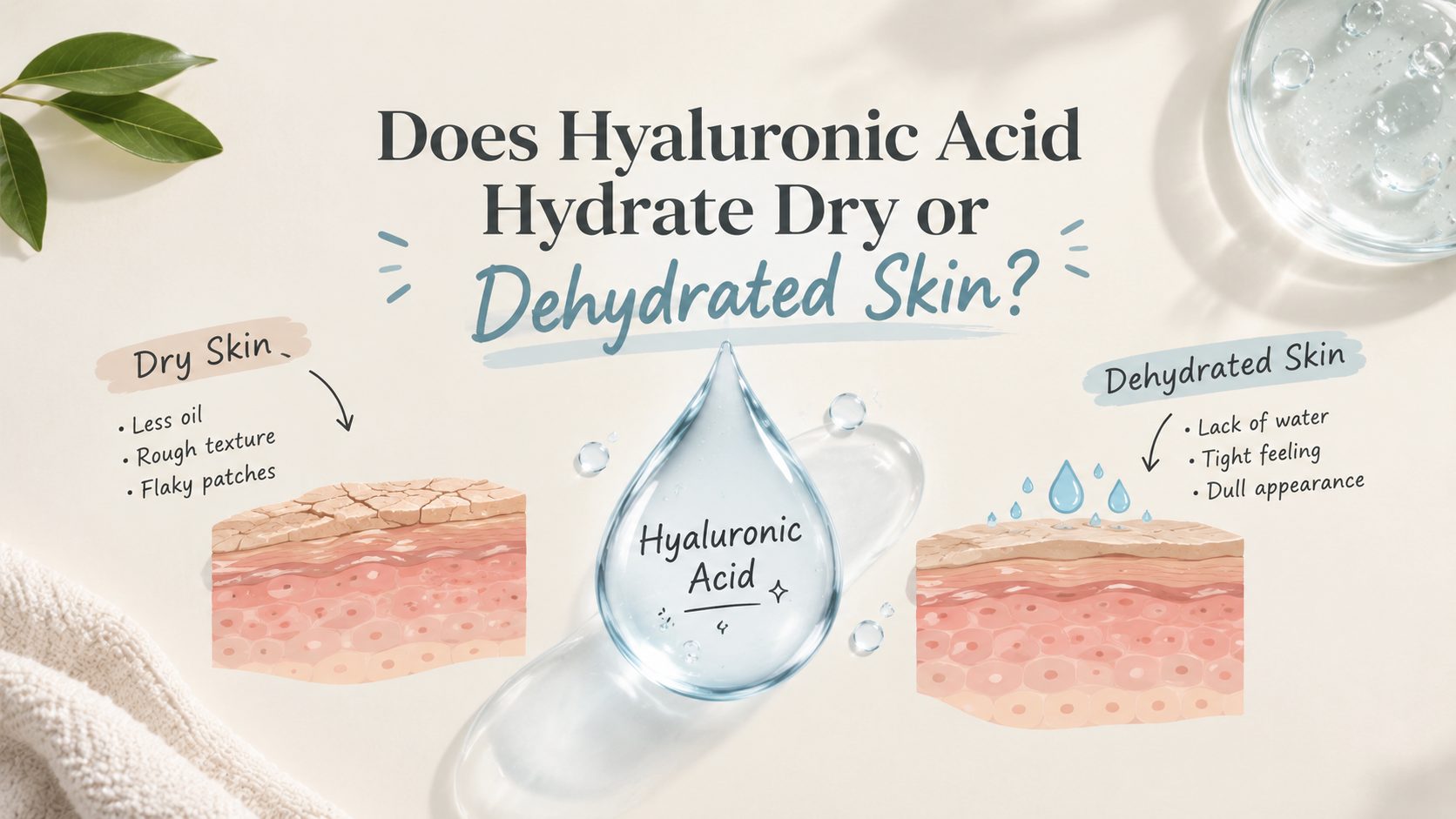
Here's where a lot of confusion comes in: dry skin and dehydrated skin aren't the same thing, and hyaluronic acid works differently for each one.
Dehydrated skin lacks water - it's a temporary condition that can affect any skin type, including oily skin. Hyaluronic acid for dehydrated skin tends to work very well here, since the issue is specifically a lack of water, which is exactly what this ingredient is designed to address.
Dry skin, on the other hand, lacks oil (not just water). It's a skin type, not a temporary condition, and it needs lipids and emollients to repair its barrier - something hyaluronic acid alone can't provide.
Quick breakdown:
- Dehydrated skin: responds well to hyaluronic acid alone
- Dry skin: needs hyaluronic acid plus richer, oil-based ingredients
- Both: benefit from combining hyaluronic acid with a barrier-supporting moisturizer
If your skin still feels tight after using hyaluronic acid, it's often a sign you have dry skin rather than simply dehydrated skin - and your routine needs more than a humectant to fix it.
Benefits of Hyaluronic Acid
Beyond basic hydration, there are several well-documented benefits of hyaluronic acid that make it worth keeping in your routine.
- Plumps skin - temporarily smooths the appearance of fine lines caused by dehydration
- Supports the skin barrier -well-hydrated skin tends to function and heal more effectively
- Lightweight and non-greasy - works well under makeup and layers easily with other products
- Suitable for most skin types - including oily, acne-prone, and sensitive skin
- Pairs well with actives - can help offset dryness caused by retinol or exfoliating acids
Because it's so gentle and versatile, it's one of the few ingredients that rarely causes irritation, making it a safe starting point for most skincare routines.
How to Use Hyaluronic Acid Serum Correctly
Knowing how to use hyaluronic acid serum properly makes the difference between skin that looks dewy and plump, versus skin that somehow ends up feeling tighter than before.
Follow these steps for best results:
- Apply to damp skin - right after cleansing or using a hydrating toner, while skin still has some moisture on it
- Never apply to bone-dry skin - without available moisture nearby, hyaluronic acid can pull water from deeper skin layers instead
- Always seal it in - follow with a moisturizer to lock hydration into the skin and prevent water loss
- Use it both morning and night - consistency matters more than any single application
Common mistakes to avoid:
- Applying it to completely dry skin
- Skipping moisturizer afterward
- Using it in very low-humidity environments without extra occlusive support
Hyaluronic Acid Skincare Routine
A simple hyaluronic acid skincare routine makes it easy to get consistent, reliable hydration without overcomplicating your routine.
Morning routine:
- Cleanser
- Hyaluronic acid serum (applied to damp skin)
- Moisturizer to seal it in
- SPF
Evening routine:
- Cleanser
- Hyaluronic acid serum (applied to damp skin)
- Treatment serum, if using one (like niacinamide or retinol)
- Richer moisturizer to lock in hydration overnight
A few pairing tips:
- Works well layered under retinol to offset dryness
- Pairs nicely with niacinamide for hydration and barrier support
- Can be layered with vitamin C, applied beforehand to avoid reducing its effectiveness
When Hyaluronic Acid Doesn't Work (And What to Do Instead)
Even when used correctly, hyaluronic acid doesn't work for everyone or in every situation - and that's worth knowing upfront.
It may fall short when:
- You live in a very dry or low-humidity climate - without enough moisture in the air, it has less to draw from
- You're applying it to dry, not damp, skin - this setup can backfire and pull moisture away instead
- Your skin is genuinely dry, not dehydrated - a lack of oil needs more than a humectant to fix
What to do instead:
- Add richer, oil-based moisturizers with ceramides or fatty acids
- Use an occlusive layer (like petrolatum or a facial oil) to seal moisture in, especially in dry climates
- Combine hyaluronic acid with barrier-repairing ingredients rather than relying on it alone
Hyaluronic acid is a helpful tool, but it isn't a cure-all - pairing it with the right supporting ingredients is often what makes the real difference.
Frequently Asked Questions
1. Does hyaluronic acid actually hydrate the skin?
Yes, hyaluronic acid does hydrate skin, but only when used correctly. It works by drawing water into the skin's surface from either the surrounding air or deeper skin layers, which means factors like humidity, application method, and whether you seal it with a moisturizer all affect how well it actually works.
2. Can hyaluronic acid make skin drier in some cases?
Yes, in very dry or low-humidity climates, hyaluronic acid can pull water from the skin's deeper layers instead of the air, potentially leaving skin more dehydrated if it's not sealed in with a moisturizer. This is why dermatologists recommend always following it with a moisturizer rather than using it alone.
3. Is hyaluronic acid good for dehydrated skin?
Yes, hyaluronic acid works very well for dehydrated skin, since dehydration is specifically a lack of water, which is exactly what this ingredient is designed to address. It draws water into the skin's surface, helping restore the hydration that dehydrated skin is missing.
4. Is hyaluronic acid enough for dry skin?
Not on its own. Dry skin lacks oil, not just water, so it's a skin type that needs lipids and emollients to repair its barrier. Hyaluronic acid can help with hydration, but dry skin typically needs richer, oil-based ingredients alongside it for real improvement.
5. What are the main benefits of hyaluronic acid?
Hyaluronic acid plumps skin and smooths the appearance of fine lines caused by dehydration, supports the skin barrier, and is lightweight and non-greasy enough to work under makeup. It's also suitable for most skin types and pairs well with other actives like retinol.
6. How do you apply hyaluronic acid serum correctly?
Apply hyaluronic acid to damp skin, right after cleansing or using a hydrating toner, so it has moisture nearby to draw from. Always follow it with a moisturizer to seal hydration into the skin, since applying it to completely dry skin can cause it to pull water from deeper skin layers instead.
7. Should hyaluronic acid be applied before or after moisturizer?
Hyaluronic acid should be applied before moisturizer, ideally to damp skin. The moisturizer applied afterward helps lock in the hydration the hyaluronic acid has drawn into the skin, preventing water loss throughout the day or night.
8. Can hyaluronic acid be used with retinol or vitamin C?
Yes, hyaluronic acid pairs well with both. It can help offset dryness caused by retinol or exfoliating acids, and it layers nicely with niacinamide for hydration and barrier support. When used with vitamin C, it's best applied after the vitamin C serum to avoid reducing its effectiveness.
9. Why doesn't hyaluronic acid work for everyone?
Hyaluronic acid may not work well in very dry or low-humidity climates, when applied to dry rather than damp skin, or for people with genuinely dry skin rather than dehydrated skin. In these cases, it needs to be paired with richer, oil-based ingredients to be effective.
10. What should I use if hyaluronic acid isn't hydrating my skin enough?
If hyaluronic acid alone isn't enough, try adding richer, oil-based moisturizers with ceramides or fatty acids, or use an occlusive layer like a facial oil to seal in moisture, especially in dry climates. Combining hyaluronic acid with barrier-repairing ingredients tends to deliver better results than using it alone.