Most people get exfoliation wrong in one of two ways. Either they scrub every day, thinking more is better. Or they try a face scrub once, feel a bit of tingling, and shove it to the back of the cabinet. There's rarely a middle ground.
Exfoliate one to three times a week. That's the range that works for most skin types. The exact number depends on two things– your skin type, and whether the scrub itself is gentle or harsh.
This guide covers exactly that. How often to exfoliate based on your skin type, what actually separates a gentle scrub from a harsh one, and the warning signs that mean you're overdoing it.
How Often Should You Exfoliate Your Face?
Most people should exfoliate one to three times a week. That's the range dermatologists generally point to, and it works for the majority of skin types.
The General Guideline
One to three times a week gives your skin enough time to recover between sessions. Oilier skin can usually handle the higher end. Dry or sensitive skin does better closer to once.
Why Daily Exfoliation Usually Backfires
Skin has a barrier for a reason. Exfoliating it every day wears that barrier down faster than it can rebuild. The result isn't smoother skin – it's irritated, sensitized skin that reacts to everything, including products you used fine before.
Signs You're Exfoliating Too Much
Your skin usually tells you before it gets bad.
- Tightness right after washing, even with moisturizer
- Redness that doesn't fade quickly
- New breakouts, especially small, irritated-looking ones
- Skin that stings when you apply products that never used to sting
If you're seeing two or more of these, cut back. Give your skin a week off exfoliation entirely, then reintroduce it at a lower frequency.
Exfoliation Frequency by Skin Type
Oily and Combination Skin — 2 to 3 Times a Week
Oilier skin tends to handle exfoliation better. More oil production, more resilience, and often more buildup to clear out in the first place. Start at two times a week, and if your skin stays calm, three is usually fine.
Dry and Normal Skin — 1 to 2 Times a Week
Dry skin already struggles to hold onto moisture. Exfoliating too often makes that worse. Once or twice a week is typically enough to keep skin smooth without pushing it into flaky, tight territory.
Sensitive Skin — Start at Once a Week
Sensitive skin doesn't need less exfoliation because it's fragile – it just needs a slower approach. Start at once a week. If there's no redness or irritation after a couple of weeks, you can experiment with a second session. If there is, stay at once a week or switch to a gentler formula altogether.
Quick reference — exfoliation frequency by skin type:
Skin type is a starting point, not a fixed rule. Adjust based on how your skin actually responds, not just what the chart says.
Gentle Exfoliation vs Harsh Scrubbing
Not all exfoliation is created equal. A face scrub can smooth skin or damage it, and the difference usually comes down to the texture and strength of what's in the formula.
Physical Exfoliants — Fine Grains vs Sharp, Abrasive Particles
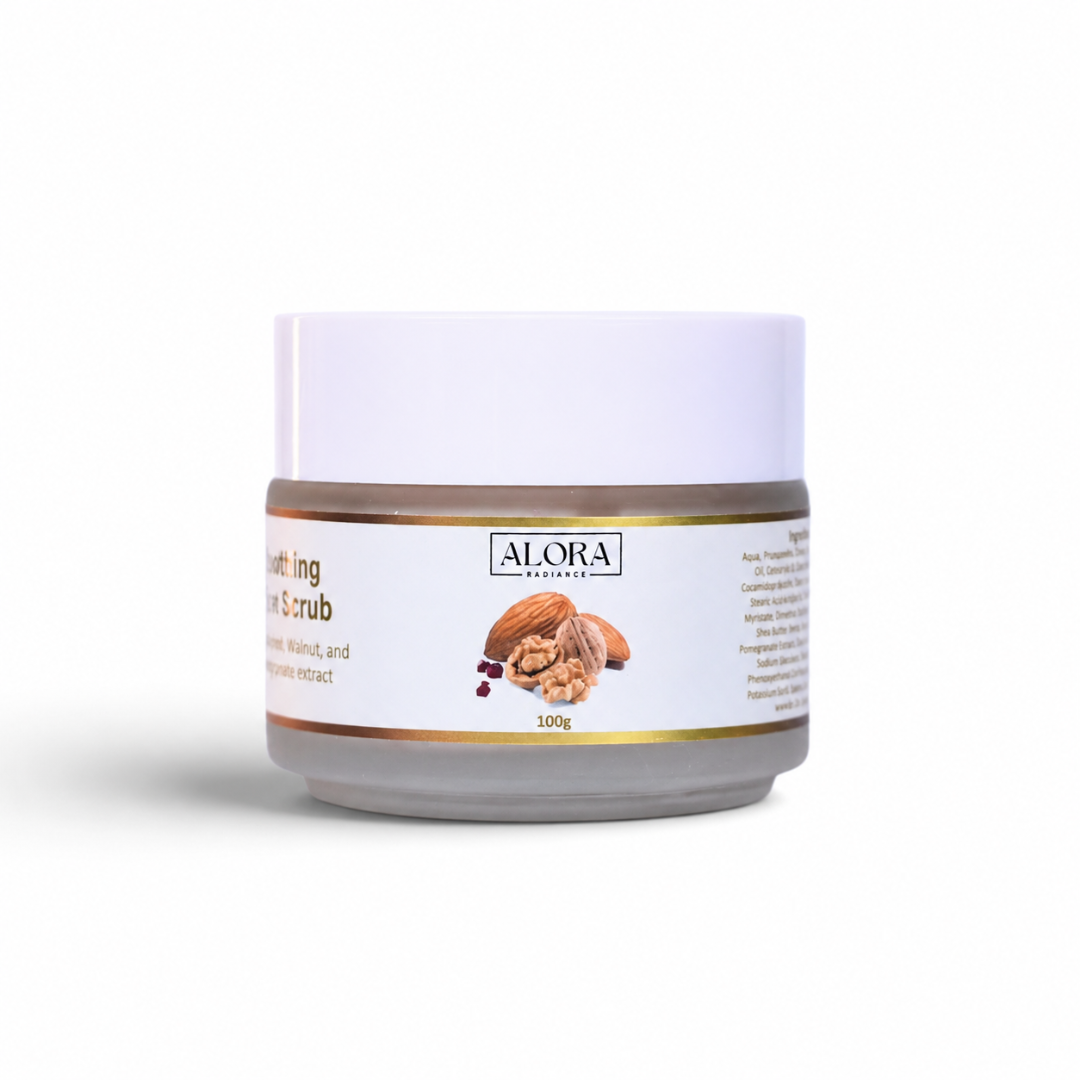
This is where most damage happens. Walnut shell and apricot kernel scrubs sound natural, but under a microscope, those particles are jagged, not round. They create micro-tears in the skin, especially on repeated use. Fine, rounded grains like rice powder or jojoba beads do the same job of lifting dead skin without the tiny cuts.
Chemical Exfoliants — Mild AHAs/PHAs vs Strong Acids
Chemical exfoliation works differently. Instead of physically scrubbing, it dissolves the bonds holding dead skin cells together. Mild options like PHAs (polyhydroxy acids) or low-percentage lactic acid are gentle enough for regular use, even on sensitive skin. Stronger acids — high-percentage glycolic acid, for instance — exfoliate faster, but they also carry a higher risk of irritation if overused.
Why "Gentle" Doesn't Mean Less Effective
There's a common assumption that gentle exfoliation is the weaker option. It isn't. A gentle formula used consistently, two to three times a week, often outperforms a harsh scrub used sparingly because your skin never has to spend days recovering from it. Effectiveness comes from consistency, not intensity.
Best Face Scrub for Sensitive Skin
Sensitive skin doesn't need to skip exfoliation. It just needs a scrub that actually respects it.
What to Look For
- Fine, uniform particles – rice powder, jojoba beads, or similarly smooth exfoliants
- Soothing ingredients built into the formula, not just the exfoliant on its own
- A short ingredient list – fewer chances for something to trigger a reaction
- Lightweight, non-drying textures that rinse off clean without stripping skin
What to Avoid
- Walnut shell or apricot kernel scrubs – the particles are jagged, not round, and can micro-tear sensitive skin
- Added fragrance – one of the most common triggers for irritation
- High-percentage acids or strong physical scrubs used too often
- Anything that leaves skin stinging or tight right after rinsing
Calming Ingredients That Pair Well With Exfoliation
Exfoliation and soothing ingredients work better together than exfoliation alone.
- Aloe vera – calms irritation, adds light hydration
- Oat extract – reduces redness, supports the skin barrier
- Centella asiatica – anti-inflammatory, helps skin recover faster after exfoliating
A scrub that combines gentle exfoliation with one or two of these calming ingredients tends to work well even for skin that reacts to most products.
Sensitive Skin Scrub — Signs Your Skin Needs a Gentler Approach
Your skin usually gives warning signs before things get worse. The key is not ignoring them.
Redness or Stinging During or After Use
Mild tingling can be normal. Redness that lingers, or stinging that makes you want to rinse it off immediately, isn't. That's your skin telling you the formula is too much, whether it's the particles, an active ingredient, or just how often you're using it.
Increased Breakouts or Barrier Damage Over Time
A damaged barrier doesn't always show up right away. Sometimes it builds slowly — more breakouts than usual, skin that feels rough instead of smooth, or products that used to work suddenly causing irritation. If your skin seems worse a few weeks into using a scrub, not better, that's the barrier struggling to keep up.
When to Switch From Physical to Chemical Exfoliation
If physical exfoliation keeps causing irritation no matter how gentle the particles are, it might just not suit your skin. Chemical exfoliants, like a mild PHA or low-percentage lactic acid, exfoliate without any manual scrubbing at all, which often works better for skin that reacts easily to friction. It's not a downgrade. For a lot of sensitive skin, it's the better option from the start.
How to Exfoliate Properly for Best Results
Technique matters almost as much as the product itself. The same scrub can smooth skin or irritate it, depending on how you use it.
Prep — Damp Skin, Short Duration, Light Pressure
Always exfoliate on damp, not dry, skin. It reduces friction right away. Keep the session short — 30 to 60 seconds is enough for most scrubs. And go light on pressure. The scrub is doing the work, not your hand.
Aftercare — Moisturizer and SPF, Always
Exfoliated skin is more vulnerable right after, especially to sun exposure. Follow up with a moisturizer to support the barrier, and never skip SPF the next day. Skin that's just been exfoliated burns more easily than skin that hasn't.
Common Mistakes
- Scrubbing too hard, thinking more pressure means better results
- Exfoliating over active breakouts, which can spread bacteria and worsen inflammation
- Skipping moisturizer afterward, leaving skin dry and more reactive
- Exfoliating right after other actives (like retinol), which stacks irritation
Frequently Asked Questions
How often should I use a face scrub?
Most skin types do well with a face scrub one to three times a week. Oily skin can handle the higher end of that range, while dry or sensitive skin usually does better closer to once a week.
Is a face scrub good for your face?
Yes, when used correctly. A face scrub removes dead skin cells, unclogs pores, and leaves skin smoother, but only if it's the right formula for your skin type and used at the right frequency. Overuse or a harsh formula can do more harm than good.
Is a face scrub bad for sensitive skin?
Not inherently. Sensitive skin just needs a gentler approach – fine, uniform particles, soothing ingredients like aloe or centella, and a lower starting frequency of once a week rather than daily use.
Should I exfoliate before or after cleansing?
Exfoliate after cleansing, on damp skin. Cleansing removes surface dirt and oil first, so the scrub can focus on exfoliating dead skin rather than just cleaning the surface.
Do I need moisturizer and SPF after exfoliating?
Yes. Exfoliated skin is more vulnerable to dryness and sun damage right after use, so moisturizer and daily SPF are essential, especially the day after exfoliating.
Can I exfoliate if I have active acne or pimples?
Avoid scrubbing directly over active breakouts, since physical exfoliation can spread bacteria and worsen inflammation. If you still want to exfoliate elsewhere on your face, gently avoid the active spots or use a mild chemical exfoliant instead.
How long should you leave a face scrub on your skin?
Most face scrubs only need 30 to 60 seconds of gentle massage before rinsing. Leaving it on longer doesn't improve results, it just increases the risk of irritation.
What's the best time of day to exfoliate – morning or night?
Nighttime is generally better. Since exfoliated skin is more sun-sensitive afterward, exfoliating at night gives your skin time to recover before sun exposure the next day.
Does exfoliating make your skin more sensitive to sunlight?
Yes. Exfoliation removes the top layer of dead skin cells, which temporarily leaves skin more vulnerable to UV damage. SPF the following day isn't optional.
Can sensitive skin ever use a physical face scrub, or only chemical exfoliants?
Sensitive skin can use a physical scrub if it has fine, uniform particles and a soothing formula. It's not a strict either-or — it depends on how that specific skin reacts, not a blanket rule.