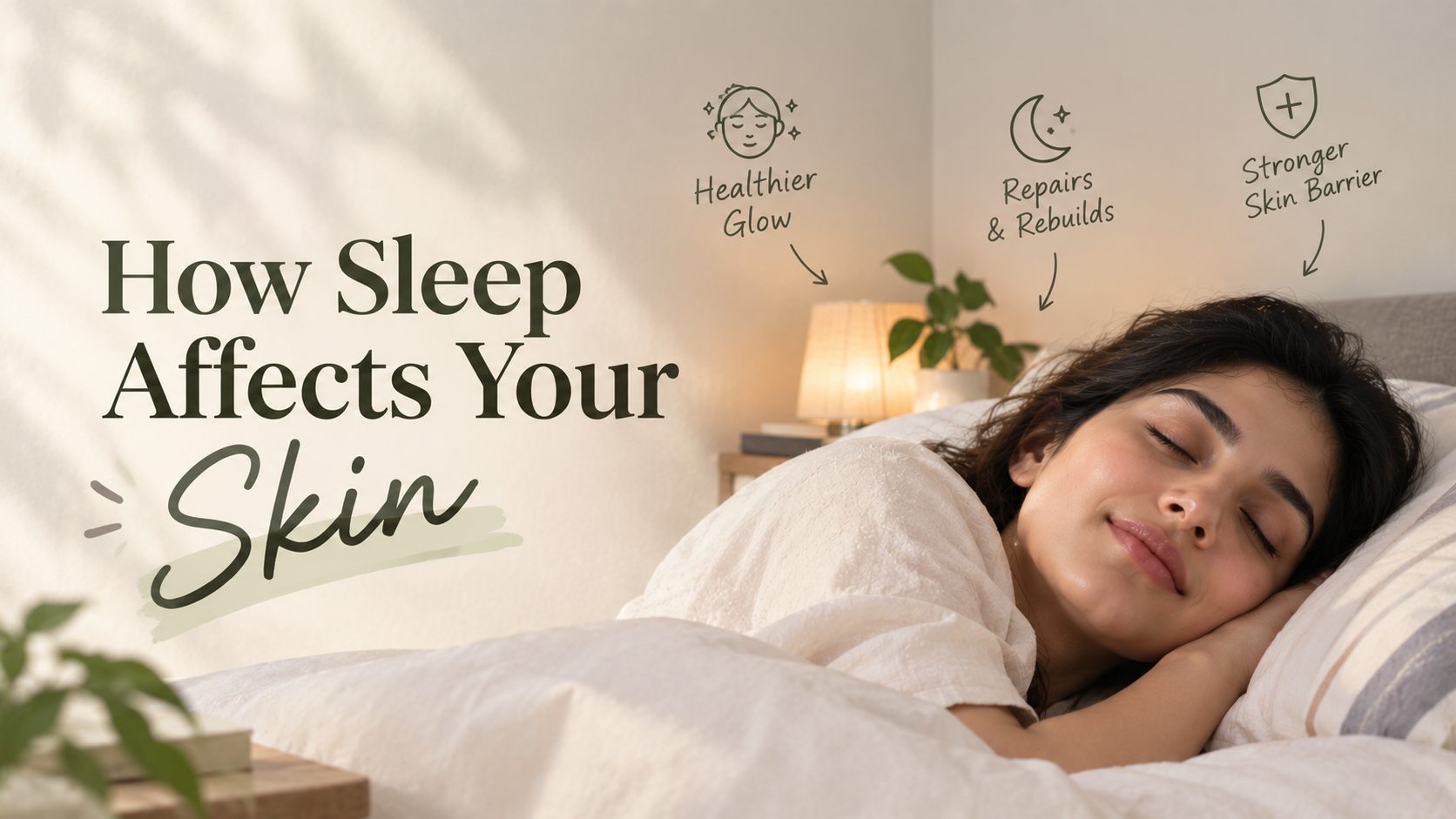
Wake up with dull skin, puffy eyes, or a surprise breakout even after a "full night's sleep"? Your skincare routine isn't the problem. Your sleep quality is.
How sleep affects skin comes down to one simple fact: your skin does most of its repair work while you're asleep. During deep sleep, blood flow increases, collagen production ramps up, inflammation calms down, and oil production rebalances. Cut that process short, even by an hour, and your skin won't get the time it needs to recover. The result shows up almost instantly: a dull, tired complexion, puffiness around the eyes, or breakouts that seem to appear out of nowhere.
The good news? Once you understand what's actually happening while you sleep, small changes can make a visible difference. Here's a closer look at the science behind it and how to fix it.
What Your Skin Does While You Sleep
Ever wonder why one bad night wrecks your skin faster than a week of bad skincare? Here's what's really going on.
While you sleep, your skin goes into repair mode - this is the core of sleep and skin health.
- Increase in blood flow, giving skin a natural glow
- Collagen production ramps up, keeping skin firm
- Cell turnover speeds up, replacing damaged cells
- Cortisol drops, reducing inflammation and excess oil
Think of it like a night shift crew fixing the day's damage. Skip that shift, and repairs pile up, showing up as dullness, puffiness, or breakouts.
Why Poor Sleep Causes Dull Skin
Among the most common dull skin causes, poor sleep quietly tops the list - and most people never connect the dots.
Reduced Blood Circulation and Oxygen Flow
Sleep is when your circulation works overtime to deliver oxygen and nutrients to skin cells. Cut sleep short, and that flow slows down. Less oxygen means less radiance. Your skin looks flat, tired, and grayish instead of fresh.
Cortisol's Effect on Skin Brightness
When you don't get enough sleep, cortisol (your stress hormone) stays elevated instead of dropping like it should overnight. High cortisol breaks down collagen and disrupts your skin's natural glow-boosting processes, leaving your complexion looking dull and uneven.
Dehydration and Sleep Loss Connection
Sleep loss also throws off your body's fluid balance. You lose moisture through your skin overnight, and without proper rest, your skin doesn't get the chance to rehydrate and repair its barrier. The result? Skin that looks parched, rough, and lackluster by morning.
The Truth Behind Morning Puffiness
Waking up with a swollen face is one of the most common skin puffiness causes and it usually has less to do with your skincare and more to do with your sleep.
Fluid Retention and Lymphatic Stagnation
Your lymphatic system drains excess fluid from your tissues, but it slows down significantly when you're lying still for hours. Poor sleep quality disrupts this drainage even further, causing fluid to pool, especially around the eyes, where skin is thinnest.
Sleep Position and Facial Swelling
The quality of your sleep shapes your skin just as much as the quantity does.
- Sleeping face-down traps fluid in the cheeks and under-eyes
- Sleeping flat (without elevation) lets fluid settle across the face overnight
- Side-sleeping can cause uneven puffiness on one side of the face
Is Beauty Sleep Actually Real?
Yes - "beauty sleep" isn't just folklore. Research consistently links sleep quality to visible skin health, and the biology behind it is well documented.
What sleep does for your skin:
- Boosts hydration levels and skin elasticity
- Speeds up skin barrier recovery after environmental stress (sun, pollution, dryness)
- Reduces visible signs of aging with consistent quality sleep
- Poor or insufficient sleep = slower repair and more visible fatigue signs
How much sleep your skin needs:
- Aim for 7–9 hours to give your skin enough time for complete overnight recovery
- Less than that cuts short your body's restoration cycle, leaving repair processes incomplete
Deep Sleep vs. REM Sleep- different jobs for your skin:
- Deep Sleep : Growth hormone peaks here, fueling collagen production and cell repair
- REM Sleep : Regulates stress hormones, indirectly controlling cortisol and inflammation (key drivers of breakouts and puffiness)
Beauty sleep isn't about how long you're in bed - it's about getting enough of the right sleep stages for your skin to actually repair itself.
Salt, Alcohol, and Sleep Quality Triggers
What you consume before bed plays a big role too. Salty meals cause your body to retain water, while alcohol dehydrates skin and disrupts deep sleep, the exact phase your body needs for fluid regulation. Together, they create the perfect conditions for a puffy morning face.
How Lack of Sleep Triggers Breakouts
If your skin breaks out right after a rough week of sleep, you're not imagining it - lack of sleep breakouts are a real, well-documented pattern, not a coincidence.
Cortisol Spikes and Excess Oil Production
- Cutting sleep short raises cortisol and keeps it elevated
- Higher cortisol signals oil glands to pump out more sebum
- Excess sebum + clogged pores = the perfect setup for breakouts
Weakened Skin Barrier and Inflammation
Sleep is when your skin repairs its protective barrier. Skip that rest, and the barrier weakens - leaving skin more reactive and inflammation-prone.
What a weakened barrier means for your skin:
- Bacteria and irritants penetrate more easily
- Existing blemishes take longer to heal
- Skin becomes more sensitive to triggers like touch, sweat, or product buildup
Poor sleep doesn't just show up as tiredness - it directly rewires your skin's oil production and defense system, making breakouts more likely and harder to heal.
Sleep Deprivation vs. Acne-Prone Skin
If you already deal with acne-prone skin, poor sleep makes things noticeably worse. Elevated cortisol combined with a weakened barrier creates a cycle: breakouts disrupt sleep, and poor sleep triggers more breakouts.
Practical example: Notice how a stressful, sleep-deprived exam week or work deadline often lines up with a sudden breakout? That's cortisol and barrier disruption working together, not bad luck, and not your skincare routine failing you.
How to Improve Your Skin Through Better Sleep
Now that you know how sleep affects skin, here's the part that actually matters - what to do about it.
AM Routine: Morning Habits to Lock In Overnight Repair
- Cleanse gently - clears away sweat, oil, and skincare residue that built up overnight
- Apply antioxidants (like Vitamin C) - protects the skin barrier your body just repaired
- Follow with SPF - shields newly renewed skin from daytime UV damage
Sleep Hygiene Tips for Better Skin Repair
PM Routine: Nighttime Skincare Habits That Support Repair
Your skincare routine can work with your body's overnight repair process instead of against it:
- Cleanse before bed - removes buildup, sweat, and pollutants that can clog pores overnight
- Apply a hydrating moisturizer - supports barrier repair while your skin is in active recovery mode
- Avoid heavy, pore-clogging products right before sleep - they trap oil and buildup against skin for hours
Good sleep and skin health habits start before you even lie down:
- Keep your room cool (65–68°F) - supports deeper, uninterrupted sleep
- Cut screen time 30–60 minutes before bed - avoids disrupting melatonin production
- Stick to a consistent sleep and wake time daily - yes, weekends too - to keep your body's repair cycle on schedule
Sleep Position Fixes for Puffiness and Irritation
Small positional changes can noticeably reduce morning puffiness:
- Sleep on your back instead of face-down - reduces pressure-related creasing and fluid pooling
- Elevate your head with an extra pillow - helps reduce overnight fluid buildup and puffiness
- Switch to a silk or satin pillowcase - reduces friction-related irritation and helps skin retain moisture
Better skin isn't just about what you put on your face - it's about syncing your routine, environment, and sleep position with your body's natural overnight repair cycle.
FREQUENTLY ASKED QUESTION
1. Why does my skin break out when I don't sleep enough?
When you don't get enough sleep, cortisol levels rise and stay elevated. This stress hormone signals your oil glands to produce excess sebum, which mixes with dead skin cells and bacteria to clog pores. Combined with a weakened skin barrier, this creates the perfect environment for breakouts to form.
2. How to get rid of a puffy face in the morning fast?
Splash your face with cold water or apply a chilled jade roller to constrict blood vessels and reduce fluid buildup instantly. Elevating your head while sleeping also prevents fluid from pooling overnight. For faster results, use an eye cream with caffeine, which tightens skin and reduces swelling within minutes.
3. Does lack of sleep age your skin faster?
Yes. Deep sleep is when growth hormone peaks, driving collagen production and cellular repair. Without enough quality sleep, collagen breakdown outpaces renewal, leading to fine lines, sagging, and loss of elasticity over time. Chronic poor sleep essentially speeds up your skin's biological aging process faster than genetics alone would.
4. What does sleep deprivation do to your face?
Sleep deprivation disrupts nearly every visible aspect of your skin. It causes dullness from poor circulation, puffiness from fluid retention, dark circles from thinning under-eye skin, and breakouts from cortisol-driven oil production. Over time, it also weakens your skin barrier, making your face more reactive to irritants and stress.
5. How to fix dull skin from lack of sleep?
Start by prioritizing 7–9 hours of consistent, quality sleep so your skin completes its repair cycle. Alongside that, stay well-hydrated, use a vitamin C serum to boost radiance and fight oxidative stress, and gently exfoliate to remove dead skin buildup. Together, these habits restore glow faster than skincare alone.
6. Is 5 hours of sleep enough for skin?
No, 5 hours falls short of what your skin needs. Most research points to 7–9 hours as necessary for the body to complete its full overnight restoration cycle, including collagen production and barrier repair. Consistently sleeping only 5 hours leaves these processes incomplete, leading to visible dullness and premature aging.
7. Why do I look tired even after sleeping 8 hours?
Sleep quality matters as much as quantity. If you're waking frequently, not reaching deep sleep, or dealing with disrupted REM cycles, your body may not complete its repair processes even after 8 hours in bed. Stress, screen time before bed, and an inconsistent sleep schedule can all reduce sleep quality.
8. Does sleeping early improve skin glow?
Yes. Sleeping earlier helps align your rest with your body's natural circadian rhythm, when repair hormones like melatonin and growth hormone are most active. This supports better collagen production, improved blood circulation, and more efficient overnight cell turnover— all of which contribute to a brighter, healthier-looking complexion by morning.
9. How to reduce under-eye bags from lack of sleep?
Elevate your head slightly while sleeping to prevent fluid from pooling under your eyes overnight. Apply a cold compress or chilled spoon in the morning to constrict blood vessels and reduce swelling. Using an eye cream with caffeine or peptides can further tighten skin and improve circulation in that area.
10. Can one bad night of sleep affect your skin?
Yes, but the effects are usually temporary. A single poor night can cause noticeable dullness, mild puffiness, or under-eye circles the next day due to reduced circulation and fluid retention. However, it's consistent, chronic poor sleep- not one occasional bad night- that leads to lasting skin damage and aging.