After a breakout clears, your skin doesn't always bounce back to normal right away. Sometimes it leaves behind a mark, sometimes a scar - and while they're often used interchangeably, they're not the same thing at all.
Because the damage sits deeper in the skin, moisturizer and spot treatments alone won't fix a scar - no matter how long you wait or how consistently you apply them.
Because these changes happen below the surface, you can often feel a scar with your fingertip even when it's hard to see in the mirror - texture gives it away before sight does.
Difference Between Acne Marks and Scars
The key distinction:
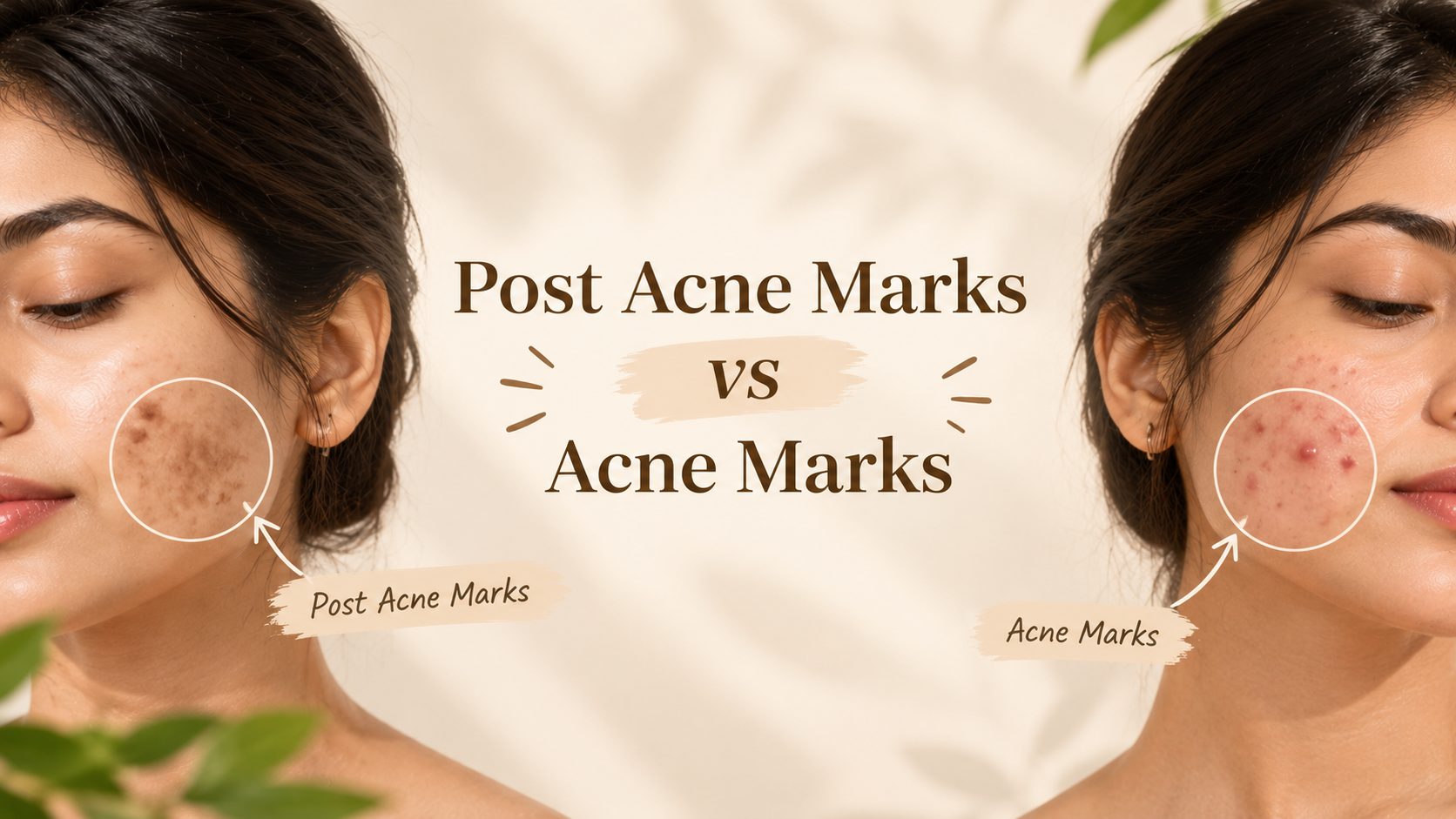
Marks = discoloration on the surface
Scars = physical changes to skin texture
People often confuse the two because both linger after a breakout heals - but knowing which one you have changed everything about how (and whether) you should treat it.
Understanding the difference between acne marks and scars comes down to one simple question: is the skin's texture affected, or just its color?
Acne marks form when inflammation triggers extra pigment production (or temporary blood vessel dilation) in the skin. There's no damage to the skin's structure - just a visible reminder that stays until your skin naturally cycles it out.
How your skin responds - under-producing or over-producing collagen - often comes down to genetics, which is why two people with similarly severe breakouts can end up with completely different scarring.
A few ways to tell them apart:
Texture: Run your finger over the spot - marks feel smooth, scars often feel uneven or pitted
Duration: Marks typically fade within weeks to months; scars are permanent without treatment
Appearance: Marks are flat and discolored; scars change the actual shape of the skin's surface
If it's flat, it's likely a mark. If you can feel a dip, ridge, or bump, you're probably dealing with a scar.
Post-Inflammatory Hyperpigmentation Explained
Post-inflammatory hyperpigmentation, or PIH, is what most people refer to as "acne marks" in reality. This occurs when inflammation from a breakout causes your skin to overproduce melanin in that particular area, leaving a darker patch behind after the pimple has healed.
Because melanin-producing cells are more sensitive to inflammation in those skin types, PIH is more prevalent and frequently more obvious in persons with medium to deep skin tones. However, anybody can experience it, particularly if they have burst or plucked pimples.
It's important to note that post-inflammatory erythema (PIE), which manifests as pink or red markings rather than brown ones, is distinct from PIH. Instead of being brought on by an overabundance of pigment, PIE is caused by dilated or damaged blood vessels, and it usually reacts differently to therapy than PIH.
Quick distinction:
PIH: brown, tan, or dark spots (pigment-related)
PIE: pink or red marks (blood vessel-related)
Both are temporary, but they respond best to slightly different ingredients and approaches.
Types of Acne Scars
Most people actually have a mix of scar types rather than just one, which is part of why a single treatment rarely clears everything - a dermatologist will often combine approaches to address each type.
Atrophic scars (the most common type) are indented or pitted, and include:
Ice pick scars - narrow, deep, and pointed, like a small puncture
Boxcar scars - wider, with defined edges, giving a pitted appearance
Rolling scars - broad, shallow depressions that create a wavy skin texture
Hypertrophic and keloid scars are raised instead of indented, forming when the skin produces excess collagen during healing. Keloid scars can extend beyond the original breakout site, while hypertrophic scars generally stay contained to the area.
The type of scar you have matters because treatments aren't one-size-fits-all – a treatment that works well for rolling scars may do very little for ice pick scars, and vice versa.
How Long Do Post-Acne Marks Take to Fade?
How quickly your skin naturally turns over also plays a role - younger skin tends to cycle through and shed pigmented cells faster, which is part of why marks can seem to fade more slowly as we get older.
On average:
Lighter skin tones: marks often fade within 3-6 weeks
Medium to deep skin tones: marks can take 6 months to a year to fully fade, since melanin-related discoloration takes longer to clear
A few things can slow the process down considerably, including sun exposure without SPF, picking or popping the original pimple, and using harsh, irritating products on already-inflamed skin.
If a mark hasn't faded at all after 6-12 months, or if it feels textured rather than flat, it may not be a mark at all - it could be early-stage scarring that needs a different treatment approach.
How to Fade Post-Acne Marks
Learning how to fade post-acne marks starts with consistency and sun protection - two things that matter more than any single "miracle" ingredient.
At-home ingredients that help:
Tranexamic acid - helps calm pigment production at the source, making it especially useful for stubborn marks that haven't budged with vitamin C or niacinamide alone
For marks that don't respond to at-home care, in-office treatments like chemical peels, microdermabrasion, or low-strength laser treatments can speed up fading significantly.
Common mistakes that delay fading:
Using heavy, occlusive products on top of active marks - thick balms or oils can trap heat and irritation, which sometimes makes discoloration linger longer instead of helping it fade.
How to Treat Acne Scars
Treating acne scars typically calls for a more focused approach than treating blemishes since scars entail actual structural changes to the skin.
At-home options can help mild scarring over time:
Retinoids - support collagen production and gradually improve texture
Exfoliating acids (like glycolic or lactic acid) - smooth texture and encourage skin renewal
Professional treatments tend to deliver more noticeable results for moderate to severe scarring:
Microneedling -stimulates collagen production to fill in atrophic scars
Laser resurfacing - targets both scar texture and surrounding discoloration
Dermal fillers - temporarily fill in deeper, pitted scars
As for whether acne scars go away on their own - generally, no. Unlike post-acne marks, which fade naturally as skin cycles through, true scars involve permanent changes to collagen structure and typically need active treatment to improve
Frequently Asked Questions
1. What is the main difference between post-acne marks and acne scars?
Post-acne marks are flat spots of discoloration caused by inflammation, while acne scars involve actual physical changes to the skin's texture, like indentations or raised tissue. Marks affect only the skin's color and fade over time on their own, while scars involve deeper collagen damage and typically require active treatment to improve.
2. What is post-inflammatory hyperpigmentation?
Post-inflammatory hyperpigmentation, or PIH, is a temporary darkening of the skin that happens after inflammation from a breakout triggers excess melanin production. It appears as brown, tan, or dark patches and is more common and noticeable in people with medium to deep skin tones, though it can happen to anyone.
3. What's the difference between PIH and PIE?
PIH (post-inflammatory hyperpigmentation) causes brown or tan discoloration due to excess pigment production, while PIE (post-inflammatory erythema) causes pink or red marks due to damaged or dilated blood vessels. They're caused by different mechanisms and often respond best to different treatments.
4. How can I tell if I have an acne mark or an acne scar?
Run your finger over the spot: marks feel smooth and flat, while scars often feel uneven, pitted, or raised. Marks are typically temporary and fade within weeks to months, while scars are permanent changes to the skin's structure that don't resolve without treatment.
5. What are the different types of acne scars?
Acne scars fall into two main categories: atrophic scars (indented), which include ice pick, boxcar, and rolling scars, and hypertrophic or keloid scars (raised), which form when the skin overproduces collagen during healing. Most people have a mix of scar types rather than just one.
6. How long do post-acne marks take to fade?
Fading time depends on skin tone and how well the skin is protected during healing. Lighter skin tones often see marks fade within 3–6 weeks, while medium to deep skin tones can take 6 months to a year, since melanin-related discoloration takes longer to clear.
7. What ingredients help fade post-acne marks fastest?
Vitamin C, niacinamide, azelaic acid, and tranexamic acid are among the most effective ingredients for fading post-acne marks, alongside consistent daily SPF use. Tranexamic acid in particular is helpful for stubborn marks that haven't responded to vitamin C or niacinamide alone.
8. Do acne scars go away on their own?
No, acne scars generally do not fade on their own the way post-acne marks do. Because scars involve permanent changes to the skin's collagen structure, they typically require active treatment, such as retinoids, microneedling, or laser resurfacing, to see meaningful improvement.
9. What's the best treatment for acne scars?
Treatment depends on the scar type and severity. Mild scarring may improve with at-home retinoids and exfoliating acids, while moderate to severe scarring often requires professional treatments like microneedling, laser resurfacing, or dermal fillers for more noticeable results.
10. What slows down the fading of post-acne marks?
Skipping sunscreen, picking at healing skin, over-exfoliating, using heavy occlusive products, and layering too many active ingredients at once can all slow down fading or trigger fresh inflammation. Consistency with gentle, targeted ingredients tends to produce better results than an aggressive, ever-changing routine.