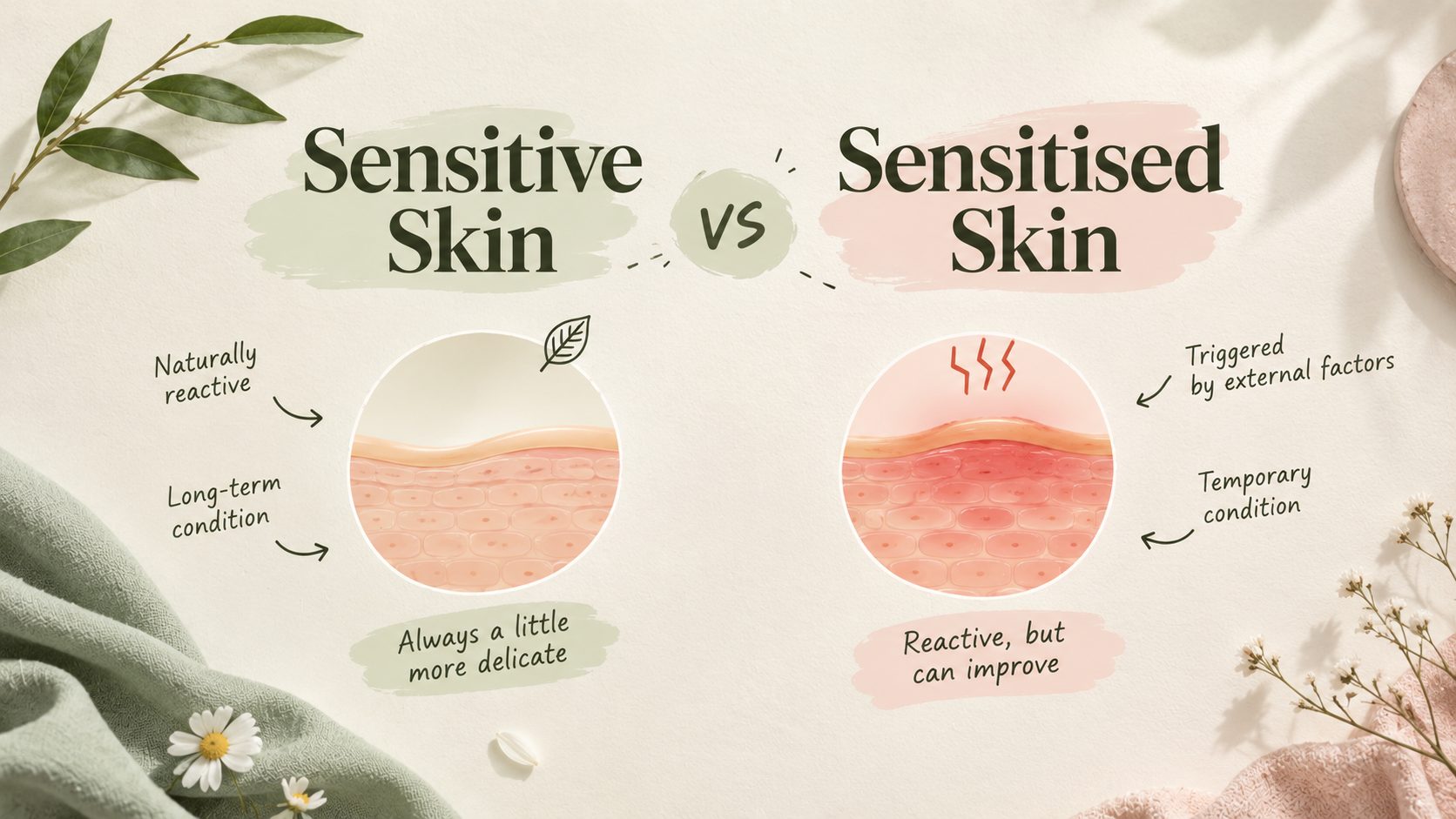
Understanding the difference between sensitive and sensitised skin starts with one key distinction: one is permanent, and the other is temporary. They're often used interchangeably, but they describe two completely different situations.
Sensitive skin is a skin type you're typically born with. It's consistent if certain fragrances or ingredients bother you, they always have, and they likely always will. Sensitised skin is different. It's a temporary state your skin falls into, usually triggered by something you've done to it, like over-exfoliating or using a harsh new product.
A simple way to tell them apart:
- Sensitive skin: reacts the same way, consistently, over the years
- Sensitised skin: shows up suddenly, often tied to a specific trigger
- Sensitive skin: typically manageable long-term with the right products
- Sensitised skin: usually improves once the trigger is removed and skin is given time to heal
People confuse the two so often because both involve redness, stinging, or reactivity but knowing which one you're dealing with changes your entire approach to fixing it.
Signs of Sensitised Skin
The signs of sensitised skin tend to show up suddenly, which is one of the biggest clues that you're not just dealing with your normal sensitive skin type.
Watch for:
- Stinging or burning with products that never bothered you before
- New redness or flushing that appears out of nowhere
- Increased tightness, dryness, or flaking
- Skin that feels "reactive" to everything, even gentle formulas
- A temporary worsening of breakouts or small bumps
If these symptoms are new, or clearly tied to a change in your routine, your skin is likely sensitised rather than naturally sensitive.
Causes of Sensitised Skin
There are several common causes of sensitised skin, and most of them come down to pushing your skin barrier past what it can currently handle.
- Over-exfoliating - using acids or scrubs too frequently
- Overusing actives - layering retinol, vitamin C, and acids without giving skin time to adjust
- Harsh cleansers - stripping formulas that disrupt your skin's natural barrier
- Environmental stress - sudden weather changes, wind, or dry indoor heating
- Trying too many new products at once - making it hard to identify what actually triggered the reaction
Often, it's not one single product causing the problem - it's the cumulative effect of several stressors hitting your skin at the same time.
How to Tell If You Have Sensitive or Sensitised Skin
A few simple questions can help you figure out which one you're actually dealing with.
Ask yourself:
- Has my skin always reacted this way, or is this new?
- Can I point to a specific change - a new product, more frequent exfoliation, a different climate?
- Is the reaction isolated to certain areas, or affecting my whole face suddenly?
A simple at-home check:
If you can trace the reaction back to a recent change in your routine, and your skin was previously fine with similar products, you're likely dealing with sensitised skin. If this kind of reactivity has been a lifelong pattern, regardless of what you use, you likely have naturally sensitive skin.
How to Repair Sensitised Skin
Knowing how to repair sensitised skin starts with simplifying everything. Your skin needs space to recover, not more products trying to "fix" it.
Key steps:
- Reduce your regimen to only an SPF, a barrier-repairing moisturizer, and a mild cleanser.
- Retinol, acids, and vitamin C should all be stopped until your skin has calmed down.
- Pay attention to components that repair barriers, such as ceramides, niacinamide, and panthenol.
Recovery usually takes anywhere from a few days to a few weeks, depending on how compromised your barrier is. Rushing this process by reintroducing products too soon often resets the healing timeline.
Skincare Routine for Sensitised Skin
A simple, consistent skincare routine for sensitised skin gives your skin the best chance to recover without additional stress.
Morning routine:
- Gentle, fragrance-free cleanser
- Calming, barrier-repairing moisturizer
- Mineral SPF (gentler than chemical sunscreens for reactive skin)
Evening routine:
- Same gentle cleanser
- Hydrating, ceramide-based moisturizer
- No actives until skin has fully calmed down
Reintroducing products:
- Add one product back at a time, waiting at least a week between each
- Start with the mildest active first, and watch closely for any reaction
- If irritation returns, pause again and give your skin more recovery time
Mistakes That Make Sensitised Skin Worse
Even with good intentions, a few common habits can slow down recovery or trigger a fresh reaction.
- Reintroducing actives too soon - before your skin has fully calmed down
- Over-cleansing or over-exfoliating - even "gentle" exfoliation can be too much during recovery
- Trying too many new products at once - making it impossible to identify what's helping or hurting
- Skipping sunscreen - sensitised skin is more vulnerable to sun-related irritation
- Expecting instant results - rushing the healing process often resets it entirely
Patience matters more than anything else here. Giving your skin time to fully recover, without jumping back into your old routine too quickly, is usually what makes the biggest difference.
Frequently Asked Answer
1. What is the difference between sensitive skin and sensitised skin?
Sensitive skin is a permanent skin type you're typically born with, reacting consistently to certain triggers over the years. Sensitised skin is a temporary condition your skin falls into, usually caused by something like over-exfoliating or overusing active ingredients, and it tends to improve once the trigger is removed and the skin is given time to heal.
2. What are the signs of sensitised skin?
Common signs include stinging or burning with products that never bothered you before, sudden redness or flushing, increased tightness or flaking, and a general feeling that your skin is reactive to everything, even gentle formulas. These symptoms usually appear suddenly rather than being a lifelong pattern.
3. What causes sensitised skin?
Sensitised skin is usually caused by pushing the skin barrier past what it can currently handle, including over-exfoliating, overusing active ingredients like retinol or acids, harsh cleansers, environmental stress, and trying too many new products at once.
4. How do I know if I have sensitive skin or sensitised skin?
Ask yourself whether your skin has always reacted this way or if the reaction is new, and whether you can point to a specific recent change in your routine. If the reaction is tied to a recent trigger and your skin was previously fine with similar products, it's likely sensitised. If it's a lifelong pattern regardless of what you use, you likely have naturally sensitive skin.
5. How do I repair sensitised skin?
Start by simplifying your routine to just a mild cleanser, a barrier-repairing moisturizer, and SPF, and pause all actives like retinol, acids, and vitamin C until your skin calms down. Focus on barrier-repairing ingredients such as ceramides, niacinamide, and panthenol while your skin recovers.
6. How long does it take for sensitised skin to heal?
Recovery time varies depending on how compromised the skin barrier is, but it typically takes anywhere from a few days to a few weeks. Rushing the process by reintroducing products too soon can reset the healing timeline and prolong recovery.
7. What should a skincare routine for sensitised skin look like?
A simple routine includes a gentle, fragrance-free cleanser, a calming barrier-repairing moisturizer, and mineral SPF in the morning, with the same cleanser and a hydrating, ceramide-based moisturizer at night. All active ingredients should be paused until the skin has fully calmed down.
8. How do I reintroduce products after sensitised skin heals?
Add one product back at a time, waiting at least a week between each new addition, and start with the mildest active first. If irritation returns at any point, pause again and give your skin more time to recover before trying again.
9. What mistakes make sensitised skin worse?
Common mistakes include reintroducing actives too soon, over-cleansing or over-exfoliating during recovery, trying too many new products at once, skipping sunscreen, and expecting instant results, which often resets the healing process entirely.
10. Can sensitised skin become permanently sensitive?
Sensitised skin is generally temporary and tends to resolve once the trigger is removed and the skin barrier is given time to heal. However, repeated or prolonged sensitisation without proper recovery can make skin more reactive over time, so addressing triggers early and allowing full recovery is important.