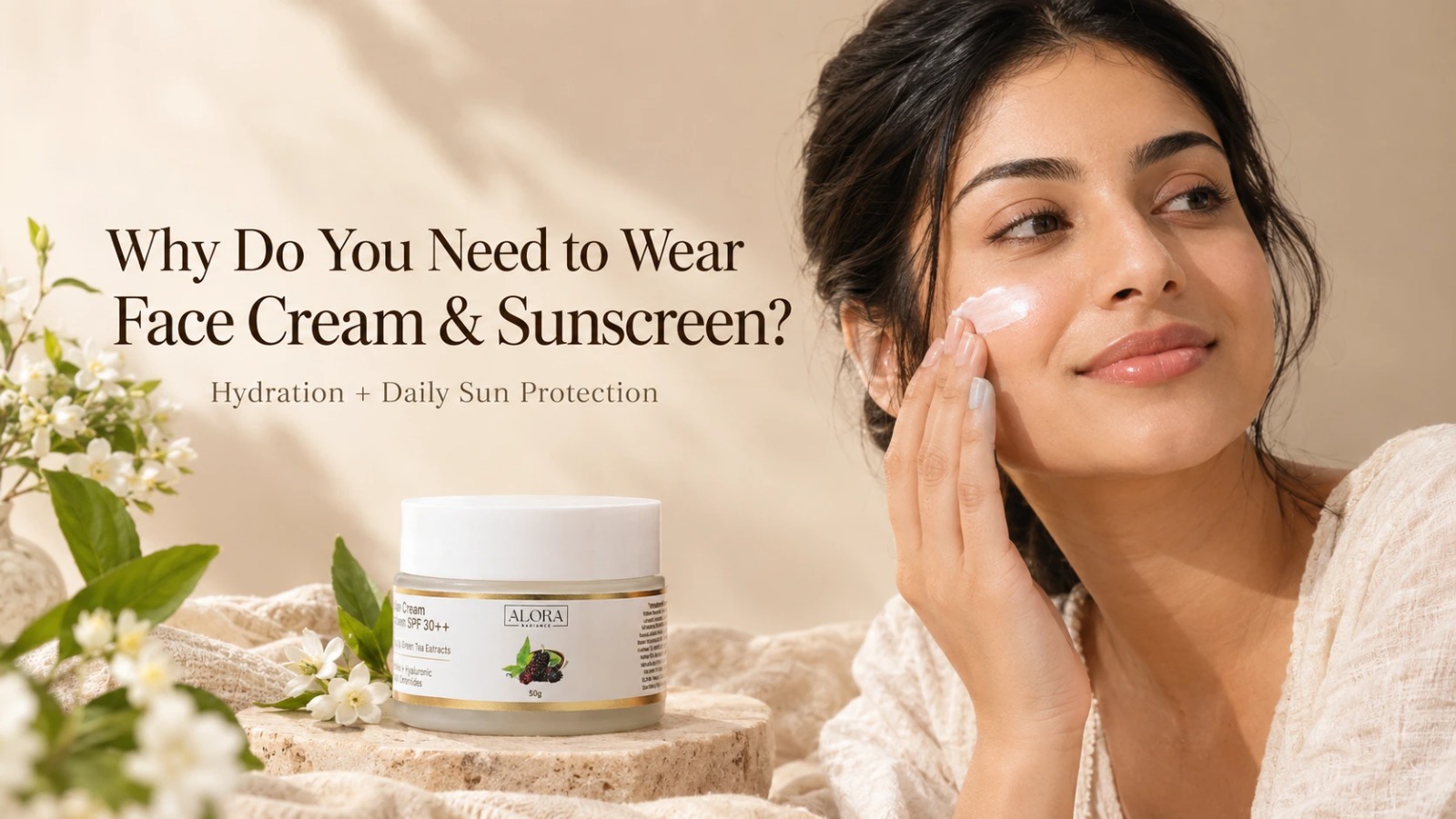
You moisturize every day. Do you sunscreen every day too?
Most people don't – not because they don't know it matters, but because it feels like one extra step in an already rushed morning. That gap between "knowing" and "doing" is where most sun damage quietly happens.
Here's the shift worth making: face cream and sunscreen don't have to be two separate steps anymore. A single formula can hydrate and protect at the same time.
This blog covers three things — why daily sun protection matters even more than people realize, what actually happens to your skin when you skip it, and how a combined face cream with SPF closes that gap without adding anything extra to your routine.
What Sun Exposure Actually Does to Unprotected Skin
Sun damage doesn't show up right away. It builds quietly, then shows up years later as something you didn't see coming.
UV Damage You Can See
The obvious stuff:
- Tanning and patchy, uneven tone
- Dark spots that don't fade on their own
- Fine lines showing up earlier than they should
Easy to blame on "just aging." Usually it's not just aging.
UV Damage You Can't See Yet
This is the part that actually matters more.
- UV breaks down collagen and elastin — the proteins holding your skin firm
- That breakdown starts long before you notice anything
- Damage builds at a cellular level, quietly, for months or years
By the time sagging or deep wrinkles show up, the real damage happened a long time ago. You're just seeing the bill now.
"I'm Indoors Most of the Day" Isn't Protection
Here's what still gets through:
None of it feels like "real" sun. It counts anyway. That's why SPF isn't a beach-day thing — it's an everyday thing.
Daily Sunscreen Benefits Beyond Just Avoiding Sunburn
Most people think of sunscreen as a product that simply protects their skin from getting burned. That's the smallest part of what it actually does.
The real daily sunscreen benefits show up slowly, over months of consistent use — not from one application, but from never skipping it.
Slows Visible Signs of Aging
- Reduces fine lines forming from broken-down collagen
- Helps skin hold onto firmness instead of sagging early
- Keeps texture smoother – less roughness, fewer visible pores over time
This isn't about reversing aging. It's about not speeding it up unnecessarily.
Prevents Hyperpigmentation and Uneven Tone From Worsening
Dark spots and patchy tone don't go away on their own if UV exposure keeps triggering them.
- Daily SPF stops new pigmentation from forming
- Makes any brightening products in your routine actually work, instead of fighting a losing battle
- Keeps existing spots from getting darker with repeated sun exposure
Reduces Long-Term Skin Cancer Risk With Consistent Use
This is the benefit that matters most, even though it's the easiest to ignore.
- Regular SPF use is directly linked to lower skin cancer risk over time
- The protection is cumulative — it only works if it's consistent, not occasional
- One sunscreen application doesn't "bank" protection for days you skip it
Why Face Cream with SPF
A separate sunscreen is good. But most of the people skip it when mornings get rushed.A face cream with SPF solves that problem.
How a Face Cream with SPF Simplifies Your Routine
One product instead of two, applied in one motion. No layering guesswork, no wondering what goes on first or whether you've waited long enough between steps. Fewer products in your routine means fewer chances to forget a step altogether. Less friction means it actually happens every day — not just on the days you remember.
Why Consistency Beats a "Perfect" Sunscreen You Keep Skipping
A high-SPF sunscreen sitting unused in a drawer protects nobody. A daily SPF 30 you actually apply outperforms a "better" one you only reach for twice a week. Protection is cumulative, and skipped days don't average out — they just leave gaps.
What to Look for in a Good Face Cream with Sunscreen
- SPF level — SPF 30 or higher for daily wear
- Broad-spectrum coverage — protects against both UVA and UVB, not just burning rays
- Added actives — ingredients like niacinamide, hyaluronic acid, or ceramides that support skin instead of just sitting on top of it
Key Ingredients That Make Face Cream & Sunscreen Work Together
SPF blocks the sun. It doesn't hydrate, repair, or brighten on its own — that's a different job, handled by whatever else is in the formula.
No sunscreen blocks 100% of UV rays, and application in real life is never perfect. That's why the ingredients around the SPF matter as much as the SPF number itself — ceramides keep the barrier intact, hyaluronic acid keeps the formula comfortable enough to wear daily, and antioxidants clean up whatever UV manages to get through. Together, they turn a basic sunscreen into a product that's actually doing something for your skin, not just sitting on top of it.
How to Apply Face Cream with Sunscreen the Right Way
Even a great formula underperforms if it's applied wrong. And most people apply sunscreen wrong — not because they're careless, just because nobody actually explains the "how."
Correct Amount and Technique
Most people use about half of what they need, then wonder why they still tan.
- Use a nickel-sized amount for the face and neck — don't skimp
- Blend evenly, including the hairline, jawline, and ears (ears get forgotten constantly)
- Let it sit for a minute or two before layering anything on top
When to Apply — Morning Routine Order
Order matters more than people think.
- Cleanse, then tone, if that's part of your routine
- Apply the face cream with sunscreen next, before makeup or other products
- Give it a couple of minutes to settle before foundation or concealer goes on
Reapplication: Does It Need Touch-Ups During the Day?
- For mostly indoor days, one solid morning application is usually enough
- For extended outdoor time, sweat, or direct sun, reapply every 2–3 hours
- SPF isn't a one-and-done shield — it wears off with time, touch, and movement, protection or not
Frequently Asked Questions
1. Do I need sunscreen if I already use a moisturizer?
Yes. Moisturizer hydrates; it doesn't block UV rays. You need both, which is exactly why a face cream with sunscreen exists.
2. What's the difference between face cream with SPF and regular sunscreen?
A face cream with sunscreen combines hydration and sun protection in one formula, so you get moisturizing ingredients (like hyaluronic acid or ceramides) along with UV protection — no separate layering needed.
3. How much face cream with sunscreen should I apply?
Apply a small amount on your face and neck. Most people apply far less than that, which is why they still get sun damage even while "wearing" sunscreen.
4. Does face cream with sunscreen work for oily skin?
Yes, especially formulas with niacinamide, which helps balance oil production instead of adding extra shine or heaviness.
5. Do I need to reapply face cream with sunscreen during the day?
For mostly indoor days, one morning application is usually fine. For extended outdoor exposure, reapply every 2–3 hours.
6. Will a face cream with sunscreen break me out?
Not if the formula is non-comedogenic and includes calming ingredients like niacinamide. Patch testing is still worth doing if you're acne-prone.
7. How much SPF is required for daily use?
SPF 30 is the general daily minimum recommended for adequate UVB protection. SPF 50 offers marginally more coverage but the jump from 30 to 50 matters far less than applying it consistently every day.
8. What are the benefits of using sunscreen every day?
Slower visible aging, less pigmentation and dark spots, a stronger skin barrier over time, and reduced long-term skin cancer risk — all from one consistent daily habit.
9. Does sunscreen improve skin texture over time?
Yes. By limiting UV-driven collagen breakdown, daily use helps skin stay smoother and more even, rather than turning rough and uneven with age.
10. Can daily sunscreen help with dark spots and uneven tone?
Yes. It prevents new pigmentation from forming and keeps existing dark spots from getting darker with continued sun exposure.