Most people grab a face wash because of the scent. Or the packaging. Or because a friend said it worked. Almost nobody actually reads the label. But your face wash ingredients matter more than the brand name on the bottle; they're the actual reason your skin clears up, stays irritated, or just doesn't change at all.
Here's the short answer: the best face wash ingredients depend on your skin type, but a few- like niacinamide, salicylic acid, and gentle hydrators work across almost every skin concern, from oiliness to acne to dullness.
This guide breaks it down properly. We'll cover what to actually look for on an ingredient label, which ones suit oily or acne-prone skin, what to avoid completely, and one standout ingredient saffron that most face washes skip but shouldn't. Everything here is based on how these ingredients are studied and used in real skincare formulation..
What Ingredients to Look for in a Face Wash
Not every ingredient on that label is doing something useful. Some are there to clean your skin. Some are there to make the product feel nice. And a few are just filler. Knowing the difference is the whole point of reading face wash ingredients in the first place.
What to look for:
- A gentle surfactant base (not harsh sulfates)
- At least one hydrating agent to offset the cleansing process
- One active ingredient suited to your skin concern (oil control, brightening, acne)
Cleansing Agents (Surfactants) — Gentle vs Harsh
Surfactants lift dirt, oil, and makeup off your skin. But not all of them behave the same way. Harsh sulfates like SLS clean fast but strip your skin's natural barrier along with the dirt which is why your face can feel tight and dry right after washing. Gentler surfactants, like decyl glucoside or coco-glucoside, clean just as effectively without leaving that stripped feeling.
pH-Balancing and Hydrating Agents
Your skin sits at a naturally acidic pH, around 4.5 to 5.5. A face wash that ignores this can throw off your skin barrier over time. Ingredients like glycerin and sodium PCA help hold onto moisture during the cleanse, so you're not left tight or flaky right after rinsing.
Active Ingredients vs Filler Ingredients
Here's a quick way to tell them apart: actives are listed with a purpose- niacinamide for brightening, salicylic acid for pores. Fillers are usually just texture or preservation (water, common thickeners). Neither is "bad," but if your face wash has no actives at all, it's probably not doing much beyond cleaning.
Skincare Ingredients That Actually Work in a Face Wash
A common question: do skincare ingredients even work if you rinse them off in under a minute? Short answer — yes, but not all of them, and not equally. Some actives bind to skin quickly enough to leave a benefit behind. Others need longer contact time and work better in a serum or cream. Here's what actually earns its place in a face wash.
Niacinamide — Brightening and Barrier Support
Niacinamide (vitamin B3) is one of the few actives that works even in a short-contact product like a cleanser. It helps calm redness, even out tone, and support your skin barrier over time.
- Good for: dullness, uneven tone, sensitive or reactive skin
- Works well alongside almost every other active on this list
Salicylic Acid (BHA) — Pore-Clearing for Oily/Combo Skin
Salicylic acid is oil-soluble, which means it can get into the pore itself, not just sit on the surface. That's why it's the go-to pick for oily and acne-prone skin.
- Good for: blackheads, clogged pores, excess oil
- Not ideal for very dry or sensitive skin — can be drying with daily use
Hyaluronic Acid & Glycerin — Hydration in a Rinse-Off Product
These two don't "treat" anything — they hold water. In a face wash, their job is to stop the cleanse from leaving your skin tight or dehydrated, which matters more than people think.
- Good for: every skin type, especially if you're using an active like salicylic acid alongside it
The honest takeaway: actives in a face wash won't do as much as the same ingredient in a leave-on product. But a well-formulated cleanser still adds up — especially when it's part of a full routine, not the only step doing the work.
Best Ingredients for Oily Skin Face Wash
Oily skin needs a face wash that controls shine without triggering a rebound because when skin gets stripped too much, it often overcorrects by producing even more oil. The goal isn't to feel "squeaky clean." It's to feel balanced.
Salicylic Acid and Charcoal for Oil Control
Salicylic acid gets into the pore and breaks down oil buildup from the inside. Charcoal works differently; it sits on the surface and pulls out excess oil and impurities like a magnet. Used together or separately, both help reduce that midday shine without over-drying if the formula is balanced right.
Clay-Based Ingredients (Kaolin, Bentonite)
Clays are absorbent by nature, which makes them useful for oily and combination skin. Kaolin is the gentler of the two goods for daily use. Bentonite is more intense and better suited to occasional use or oilier zones like the T-zone, since it can be drying if overused.
Lightweight, Non-Comedogenic Hydrators
Oily skin still needs hydration, skipping it just makes oil production worse. The trick is picking lightweight hydrators like glycerin or niacinamide that won't clog pores or feel heavy, unlike richer oils that can sit on the skin's surface.
Quick reference — best face wash ingredients for oily skin:
Face Wash Ingredients for Acne-Prone Skin
Breakouts need real ingredients, not just a clean-feeling wash. But going too aggressive backfires. Acne-prone skin gets more inflamed, not less, when you overdo it.
Salicylic Acid vs Benzoyl Peroxide
They're not the same thing. Salicylic acid dissolves in oil, so it gets inside the pore and clears out what's stuck there. Good for blackheads and the low-grade breakouts that never fully go away.
Benzoyl peroxide works differently. It kills the bacteria that cause acne in the first place. Usually stronger for active, inflamed pimples. It's also drying, and you don't see it in face washes often the contact time is too short to do much.
Most people are better off with a salicylic acid cleanser day to day. Save benzoyl peroxide for a spot treatment.
Tea Tree Oil
Natural, antibacterial, milder than the actives above. A decent pick if you want something less harsh than BHA. Won't do much for cystic or stubborn acne, though.
Niacinamide
Acne doesn't stop at the breakout. It leaves marks. Niacinamide helps with both sides — it calms the inflammation while it's happening and fades the discoloration after.
What to Skip if You're Acne-Prone
- Heavy oils like coconut or mineral oil — they clog pores
- Harsh sulfates (SLS) — strip skin, can push it to produce more oil
- Alcohol-heavy formulas — dry things out and make irritation worse
Ingredients to Avoid in a Face Wash for Clear Skin
Some ingredients do more harm than good. Here's what to watch for on the label.
Harsh Sulfates (SLS) and Over-Drying Agents
Sodium lauryl sulfate cleans fast, but it strips your skin's natural oils along with the dirt. Skin ends up tight, dry, sometimes flaky. Over time, that can trigger more oil production, not less.
- Look for "sodium lauryl sulfate" high up on the ingredient list
- Swap for gentler cleansers like decyl glucoside or coco-glucoside
Synthetic Fragrance and Irritants for Sensitive Skin
Fragrance is one of the top causes of skin irritation and allergic reactions. It adds nothing functional — it's there purely for scent.
- Watch for "parfum" or "fragrance" on the label
- Go fragrance-free if your skin reacts easily or feels irritated often
Comedogenic Oils That Can Clog Pores
Certain oils sit on the skin and block pores instead of washing clean. Not a problem for everyone, but a common trigger for breakouts.
- Coconut oil and mineral oil are the usual culprits
- More of a concern for oily and acne-prone skin than dry skin
Quick red-flag checklist: if a face wash lists SLS near the top, includes fragrance, and has coconut or mineral oil — it's probably not doing your skin any favors.
Saffron in Face Wash– The Ingredient Spotlight
Saffron doesn't show up in many face washes. That alone makes it worth a closer look.
What Saffron Does for Skin
- Brightening — helps even out dull, tired-looking skin
- Antioxidant-rich — helps protect skin against everyday environmental stress
- Anti-inflammatory — calms redness and irritation
Why Saffron Is Rare in Face Washes
- It's expensive, and cleansers are a rinse-off product, so brands usually save it for serums or creams where it stays on the skin longer
- A face wash with saffron in the mix is a sign the brand didn't cut corners on the formula
- Most "brightening" face washes lean on cheaper ingredients like vitamin C derivatives instead
Who Benefits Most From Saffron-Infused Cleansers
- Dull or tired-looking skin that needs a brightness boost
- Uneven skin tone, especially early signs of it
- Sensitive skin, since saffron's anti-inflammatory properties make it gentler than some other actives
The takeaway: saffron won't replace a serum, but in a face wash, it's a step up from the usual brightening ingredients most cleansers rely on.
How to Choose a Face Wash for Clear Skin
Short answer: pick a face wash based on your skin type and one active ingredient that targets your main concern. Everything else is secondary.
Match Ingredients to Your Skin Type
- Oily skin — salicylic acid, charcoal, or clay-based cleansers
- Dry skin — gentle surfactants with glycerin or hyaluronic acid, skip anything with sulfates
- Combination skin — a balanced formula, maybe niacinamide, nothing too stripping
- Sensitive skin — fragrance-free, minimal actives, saffron or niacinamide over harsher options like salicylic acid
How to Patch-Test New Actives
New active ingredient, new risk of irritation. Test it first.
- Apply a small amount to your inner arm or behind your ear
- Wait 24 to 48 hours
- No redness, itching, or breakout — safe to use on your face
- Any reaction — skip it, try something gentler
Building a Face Wash Into a Full Routine
A face wash on its own only does part of the job. It's step one, not the whole routine.
- Cleanser — removes dirt, oil, makeup
- Treatment — serum or targeted active for your specific concern
- Moisturizer — locks in hydration, supports the skin barrier
Skipping the last two steps is the most common reason people think their face wash "isn't working." It probably is. It's just not supposed to do everything on its own.
Conclusion
At the end of the day, face wash ingredients matter more than the brand name or the price tag. A cheap cleanser with the right actives can outperform an expensive one that's mostly filler and fragrance. Once you know what to look for, reading a label takes ten seconds and saves you from a lot of trial and error.
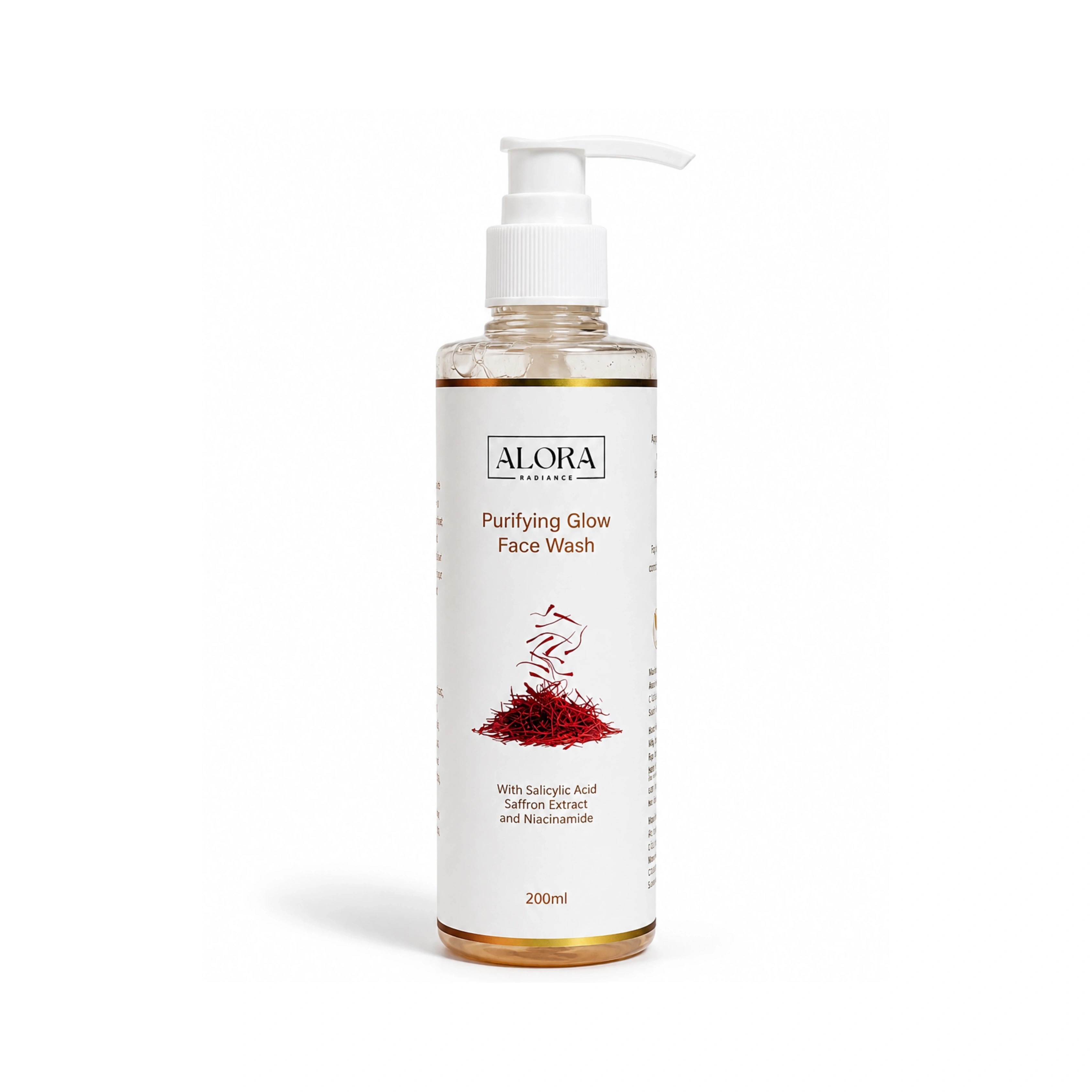
If you want a cleanser that's already built around these ingredients, Alora Radiance's Purifying Glow Face Wash brings together saffron, gentle surfactants, and skin-friendly actives in one formula, rather than making you piece it together yourself.
Either way, the real takeaway is simple: check the ingredients before you check anything else.
Frequently Asked Questions
Can you use niacinamide on your face every day?
Yes, niacinamide is gentle enough for daily use. It's well-tolerated by most skin types, including sensitive skin, and doesn't carry the same irritation risk as stronger actives like retinol or salicylic acid.
Is niacinamide good for your face?
Yes. Niacinamide helps brighten dull skin, calm redness and inflammation, and support the skin barrier over time. It works for nearly every skin type and concern, which is why it's one of the most commonly recommended skincare ingredients.
Is saffron face wash good?
Yes. Saffron offers brightening, antioxidant, and anti-inflammatory benefits, making it especially useful for dull skin, uneven tone, and sensitive skin. It's rare in face washes since brands usually save it for serums, so a saffron-based cleanser is generally a sign of a more thoughtfully formulated product.
Can I use salicylic acid face wash every day?
For most people with oily or acne-prone skin, yes. But if your skin is dry or sensitive, start with alternate days first, since daily use can be drying for some skin types.
Which one is better, niacinamide or salicylic acid?
Neither is "better" outright — they solve different problems. Salicylic acid is better for clogged pores, blackheads, and oil control. Niacinamide is better for brightening, calming inflammation, and general skin barrier support. Many routines use both together.
What face wash ingredients help with acne-prone skin?
Salicylic acid, benzoyl peroxide, tea tree oil, and niacinamide are the most effective ingredients for acne-prone skin. Salicylic acid clears pores, benzoyl peroxide targets acne-causing bacteria, tea tree oil offers a gentler natural option, and niacinamide calms inflammation and fades post-acne marks.
What ingredients should I avoid in a face wash?
Avoid harsh sulfates like SLS, synthetic fragrance, and comedogenic oils such as coconut or mineral oil. These can strip your skin, trigger irritation, or clog pores, depending on your skin type.
How do I choose the right face wash ingredients for my skin type?
Match the ingredients to your skin type: salicylic acid, charcoal, or clay for oily skin; gentle hydrators like glycerin for dry skin; a balanced formula with niacinamide for combination skin; and fragrance-free, minimal-active formulas for sensitive skin.
Ingredients to look for in facewash?
Look for a gentle surfactant (not harsh sulfates), a hydrating agent like glycerin or hyaluronic acid, and at least one active ingredient suited to your skin concern, such as niacinamide, salicylic acid, or saffron.
Which face wash ingredients are best for oily skin?
Salicylic acid, charcoal, and clay-based ingredients like kaolin or bentonite are best for oily skin. They help control excess oil and clear clogged pores without over-stripping the skin.